
Who This Guide Is For
This article is written for you – someone who has already been scammed, or someone who fears they might be.
Maybe you invested in a fake cryptocurrency platform and watched your savings disappear. Maybe you paid for goods that never arrived. Maybe you received a threatening call from someone claiming to be a police officer, demanding money to avoid “digital arrest.” Whatever the original fraud, you are now vulnerable. Not because you are careless or naive, but because you are hurting. And hurt people are the easiest targets in the world.
The criminals know this better than anyone.
The scam documented on this page is not a standard phishing attack. It is what security professionals call a recovery scam, also known as a secondary fraud or advance‑fee scheme. It is designed specifically for people who have already been victimized. The attackers impersonate Interpol, the FBI, the U.S. Department of Justice, or a fictional “international complaint center.” They promise to investigate your case and recover your stolen funds. All they need is a small upfront payment for “processing fees,” “legal costs,” or “asset release.”
The money you send will vanish. The promised investigation will never happen. And the criminals will disappear, leaving you poorer and more desperate than before.
This guide will walk you through exactly how this secondary fraud operates. It will share true stories of people who lost hundreds of thousands of dollars to fake Interpol and FBI agents – and the rare cases where quick thinking saved the day. Most importantly, it will give you the tools to recognize the lie before it costs you another penny.
The Anatomy of the Second Strike: How a Fake Interpol Complaint Center Steals from Grieving Victims
The attack intercepted and neutralized by the Antiphishing.biz security team follows a predictable, emotionally brutal pattern. It does not rely on sophisticated hacking. It relies on something much more powerful: your hope.
Step One: The Hook That Finds You When You Are Weak
The first contact arrives after you have already been scammed. The criminals obtain your contact information from the original fraud – perhaps from a data breach, perhaps from a fake “recovery” website, perhaps from the very same scammer selling your details to accomplices. Then they reach out via email, social media, or a phone call.
The message is urgent and reassuring at the same time. It claims to come from a legitimate law enforcement agency: Interpol, the FBI, the U.S. Department of Justice, or a generic “International Complaint Center.” The language is professional. The logos look official. The tone is sympathetic.
“We have been monitoring your case,” the message might say. “A large sum of money – millions of dollars – has been recovered from the criminals who defrauded you. You are eligible to receive a portion of these funds. However, you must first verify your identity and pay a small processing fee.”
Step Two: The Website That Looks Like Authority
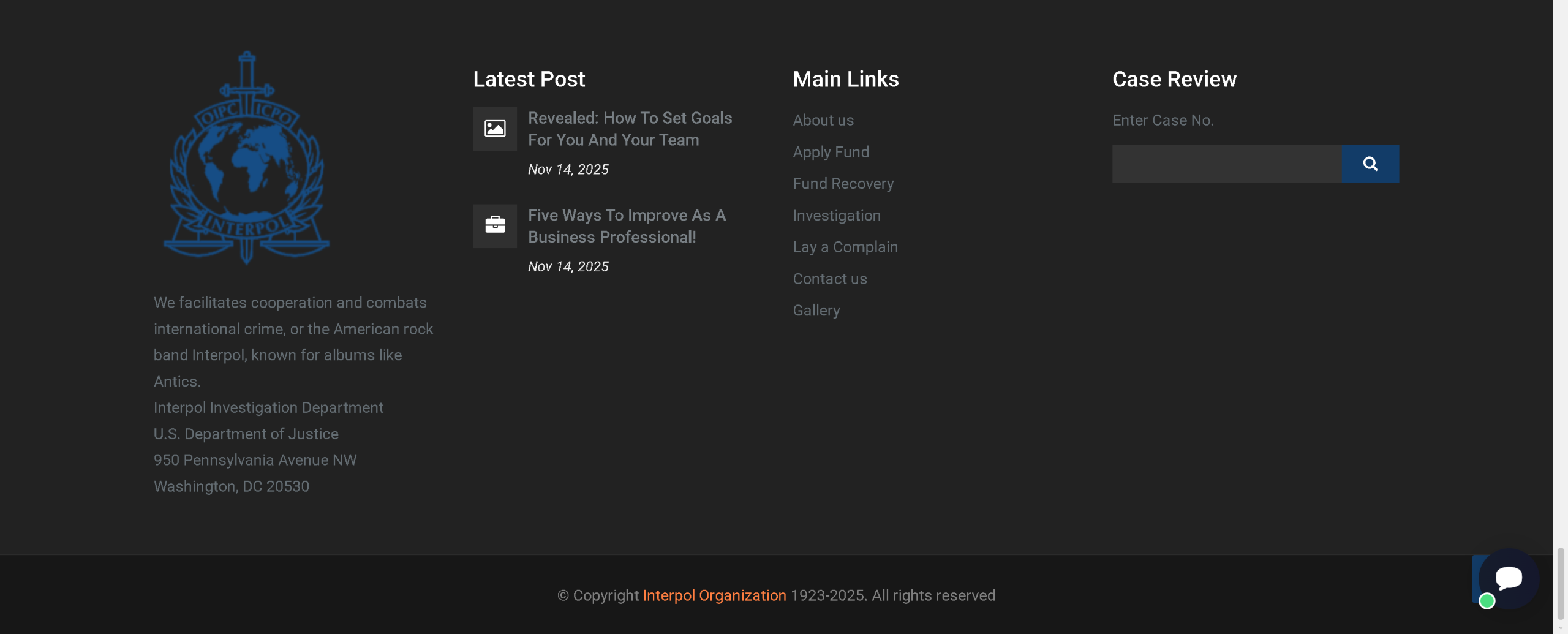
If you click the link, you are taken to a webpage that has been carefully constructed to resemble a government or law enforcement portal. The Antiphishing.biz analysis notes that the fake site features stock photos, generic security service descriptions, and a “Complaint Form” where you are asked to enter a case number.
Incident Report: This malicious interface was logged, cross-checked, and neutralized firsthand by the
Antiphishing.bizsecurity team during our automated link scanning workflows. To protect the public, the dangerous destination URL has been fully defanged within our infrastructure. We document and analyze these live visual patterns to help security researchers and users detect replica fraud techniques before financial damage occurs.
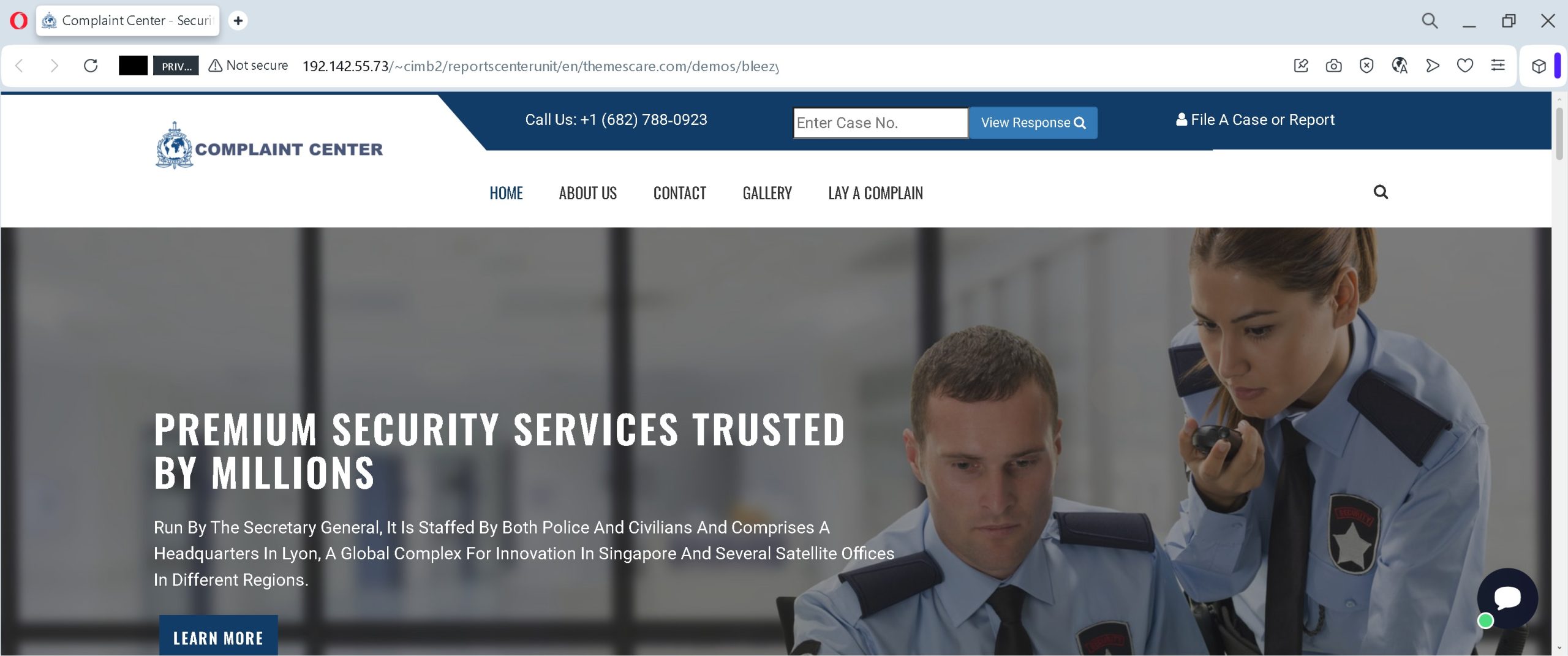
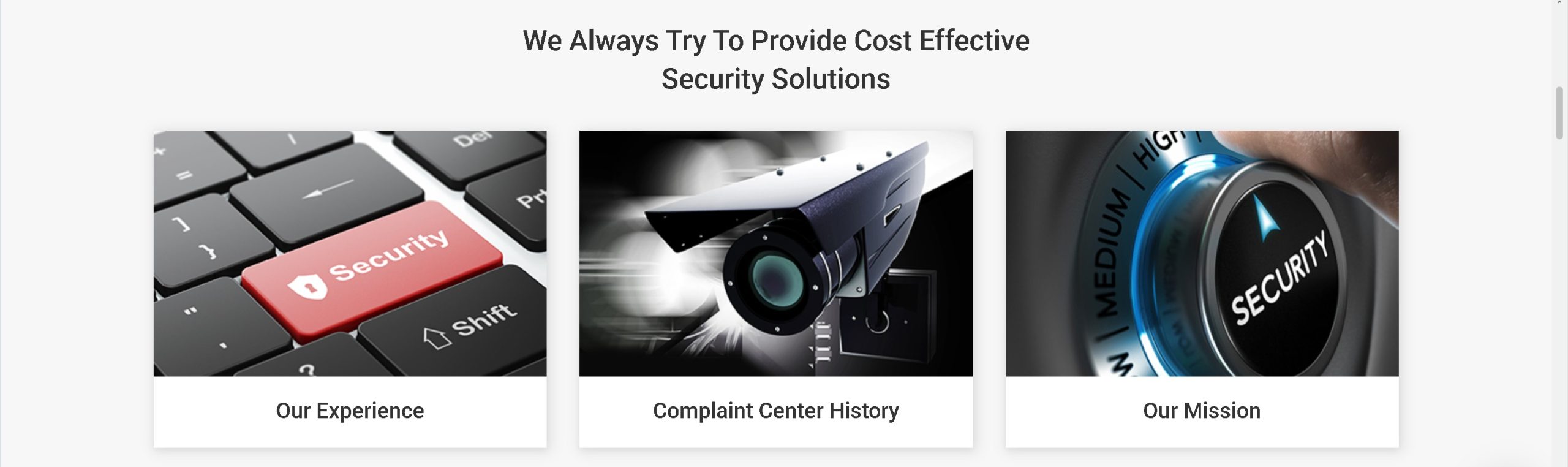
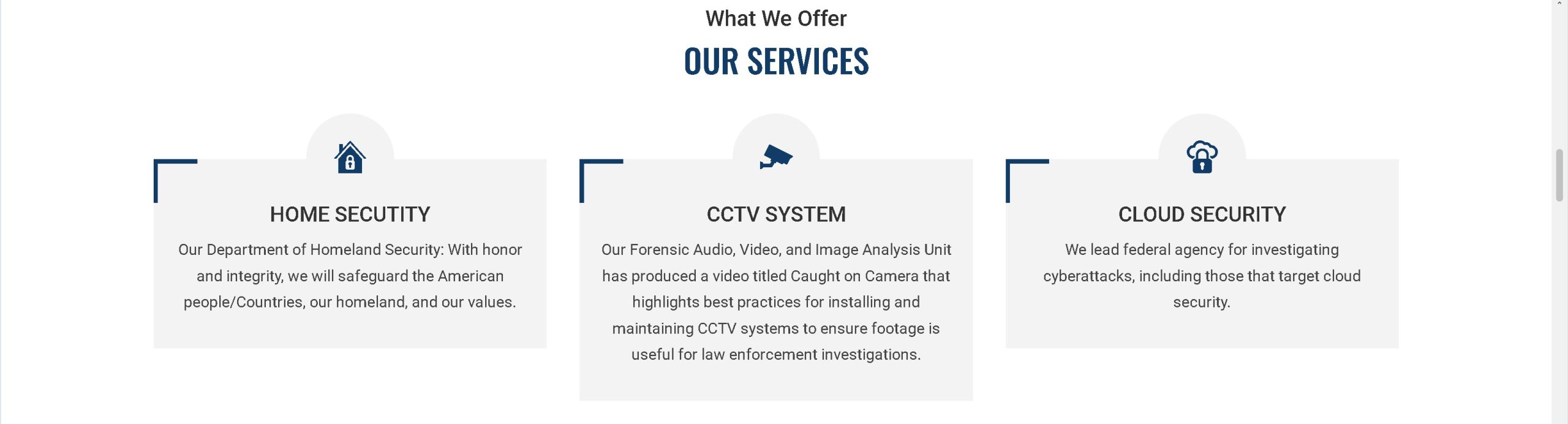




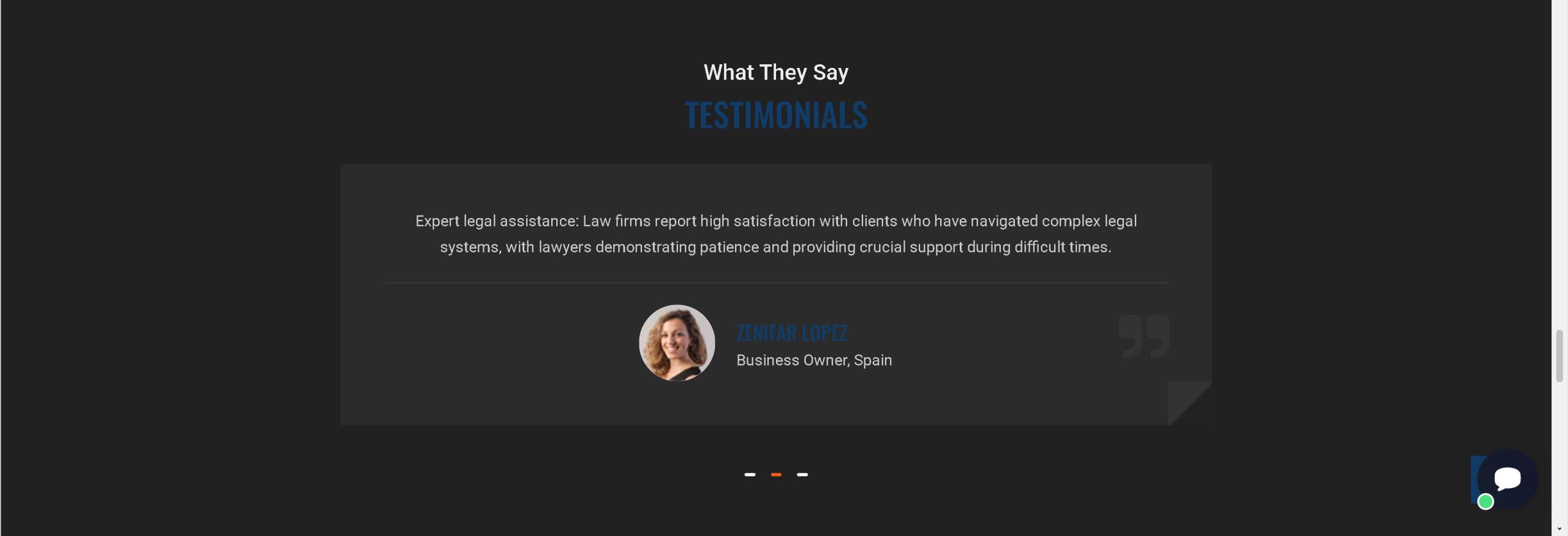
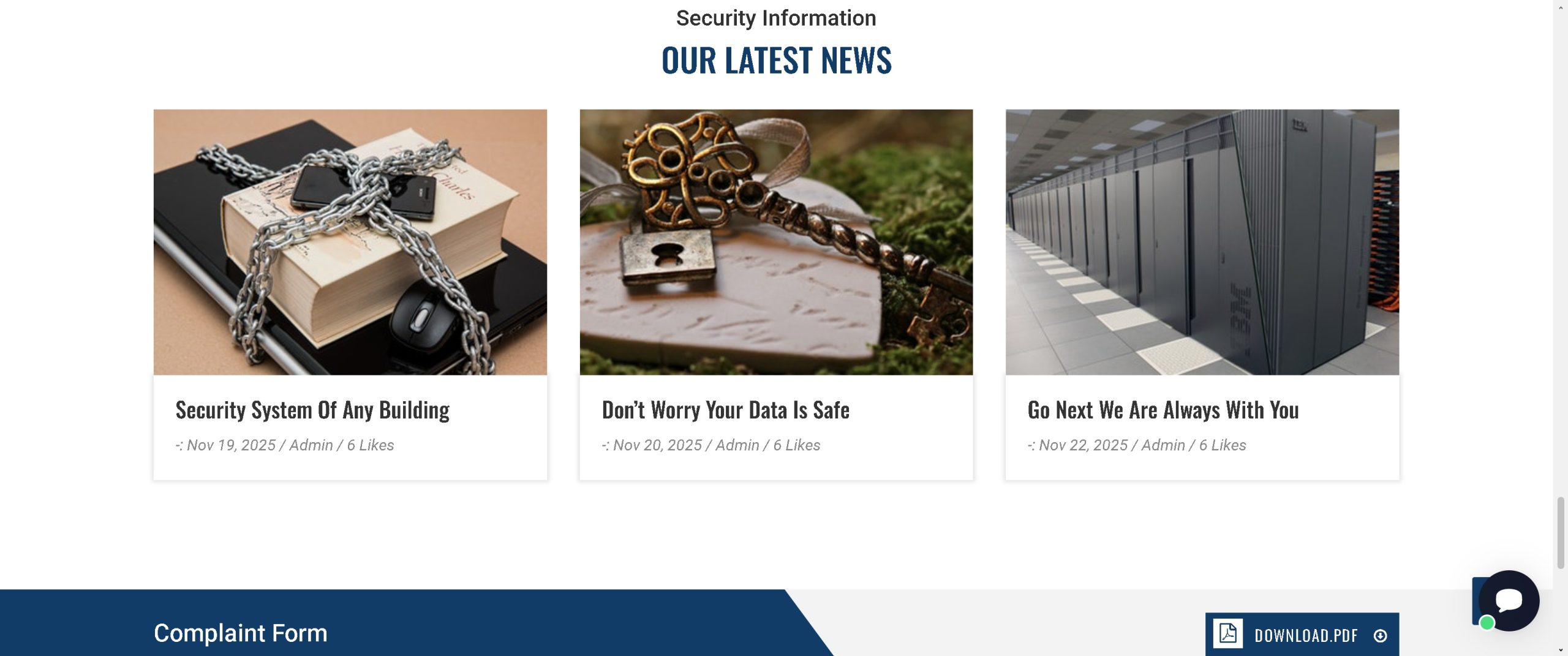
The site often includes fabricated testimonials – for example, a generic quote from “Zenifar Lopez, Business Owner, Spain” – that are completely invented. It may also mix unrelated topics like “Bodyguard” and “Computer Security” to pad the content and create an illusion of depth.
One of the clearest warning signs is the web address itself. Instead of an official .gov.intAntiphishing.biz report flags a URL containing 192.142.55.73~cimb2/…
The criminals also make the fatal mistake of overreaching. The site claims to be run by a “Secretary General” and references Interpol, the FBI, and the U.S. Department of Justice all at once. No real organization combines all these entities. Interpol is an international police organization headquartered in Lyon, France. The FBI is a U.S. federal agency. They do not share a single complaint center. This mash‑up is a desperate attempt to fabricate authority, and it is a dead giveaway.
Step Three: The Request That Should Never Come
After you enter a case number or submit a complaint form, the next step – not fully shown in the screenshots – is the extraction phase. You will be asked to provide one or more of the following:
- Your full legal name, address, date of birth, and Social Security number (or equivalent national ID).
- Scans of your passport, driver’s license, or other government‑issued identification.
- Your banking or credit card details, under the guise of “verifying your identity.”
- An upfront payment for “investigation costs,” “processing fees,” “legal expenses,” or “asset release.”
The Antiphishing.biz report states clearly: “The victim is asked to enter a ‘Case Number’ or file a complaint. In subsequent steps, the victim would be asked to provide personal identification, banking details, or upfront fees for ‘investigation’ or ‘asset recovery’”.
The goal is fourfold. First, to steal your personal information for identity theft. Second, to collect your banking details for direct financial fraud. Third, to extract an advance fee for a service that will never be performed – a classic “recovery scam.” Fourth, to use the threat of law enforcement action to intimidate you into compliance.
The Antiphishing.biz team documents this pattern with chilling precision: “Perpetrate an advance fee fraud (recovery scam) – the victim pays a fee to ‘unlock’ their non‑existent refund or investigation, but never receives any service. Impersonate law enforcement to intimidate victims into compliance”.
Real Stories That Will Haunt You
These are not hypothetical scenarios. These are the actual experiences of people who were already hurting – and then lost everything.
The Mumbai Retiree Who Paid ₹2 Crore to a Fake Interpol Agent
A 71‑year‑old retired employee in Mumbai received a phone call on the evening of November 24, 2025. The caller introduced himself as S.K. Jaiswal, an officer from the Mumbai Cyber Cell. He claimed that the retiree’s name had surfaced in a criminal case.
Later that same day, another caller – identifying himself as Karan Sharma – claimed to be an official from the Enforcement Directorate. The fraudster alleged that during a raid at the residence of a money‑laundering suspect, a diary had been found containing the victim’s Aadhaar card details and records of financial transactions.
The criminals then sent forged documents via WhatsApp: an Interpol Red Notice, fund‑freezing orders, and purported Supreme Court directives. They conducted video calls while posing as court officials, threatening the victim with immediate “digital arrest.”
Under immense mental pressure and fear, the retiree transferred a total of ₹2,04,47,047 (approximately $245,000) to various bank accounts as directed. The criminals continued demanding more money. Only when the victim’s suspicion finally overcame his terror did he approach the police station – where he was told he had fallen prey to a sophisticated cyber fraud.
This was not a phishing email with a fake logo. This was a coordinated psychological assault that used forged legal documents, video calls, and threats of imprisonment to break a vulnerable elderly man.
The Fort Worth Widow Who Handed Over $600,000 in Gold Bars
Ann Reed, an 84‑year‑old widow from Fort Worth, Texas, thought she was helping the FBI investigate a case. Instead, she became the victim of an elaborate scam that cost her nearly $600,000.
The scheme began in May 2025 with a phone call from someone claiming to be FBI Agent Richard Williams. Over the following weeks, Reed received daily calls and doctored documents – including fake FBI warrants and badges – that convinced her she was working on an official investigation.
“I fell for it because I thought I was working for the FBI,” Reed later said. “I really did”.
Reed kept meticulous notes throughout the ordeal. She was instructed to move money from her trust to several banks, then convert the funds into gold bars. “They were telling me how much gold to buy. To put it here, put it there,” she said.
She met with someone in a parking lot near a closed Wendy’s restaurant three times, handing over approximately $500,000 worth of gold bars. The location had no surveillance cameras and no witnesses.
When Reed finally checked her accounts, the truth was devastating. “I got on and looked at one bank account; it was closed. I opened another bank account; it was closed. No money. It was closed,” she said.
Her son, Matthew Reed, recognized the fraudulent documents immediately. “First time I saw it, I was like, that’s fake. It looks like a canned photo,” he said. But by then, his mother had already begun following the scammer’s instructions.
Ann Reed’s words capture the shame that so many victims feel: “Sickening, and foolish and dumb. What else can I say? Hard. Hard to let them know I was so foolish I fell for a scam”.
The money she had planned to leave her children and grandchildren is gone.
The New Zealand Investor Who Lost $45,000 to the People Who Promised to Save Him
A New Zealand man had already lost $350,000 in an investment scam. Then he was approached by a company that claimed to be experts in recovering funds from previous frauds. Their website promised a 100% money‑back guarantee and boasted a success rate of more than 95%.
The man was pressured into making an upfront payment of $45,000. He was told it was required to retrieve his money. He paid. He never saw a single dollar of his original $350,000 returned. The recovery company vanished, and the man lost another $45,000.
Banking Ombudsman Nicola Sladden explained that recovery room scammers claim to work with customers to build a strong case to force the return of money from the original scammer. But these so‑called experts have a poor understanding of banking practices and laws. Their involvement often prejudices banks’ ability to recover funds and creates delays that benefit no one but the criminals.
Sladden’s blunt advice: “Invariably, victims lose even more money”.
The California Couple Who May Lose Their Home After 37 Years
A Japanese‑American elderly couple in Southern California fell victim to a highly sophisticated FBI impersonation scam. They lost their entire life savings – more than $850,000 – and now face the possibility of losing the home they have lived in for over 37 years.
The scammers posed as FBI agents and convinced the couple that their accounts had been compromised. Under threat of arrest, the victims transferred their savings to what they believed were secure government accounts. By the time they realized the truth, their retirement nest egg was gone.
These stories share a common thread. Every victim was already in a vulnerable position – grieving, isolated, retired, or previously scammed. Every victim received a communication that felt official, urgent, and reassuring. And every victim paid a price that went far beyond money: shame, self‑blame, and the loss of dreams they had spent decades building.
The People Who Saved Themselves (And How You Can Too)
Not every story ends in tragedy. Some people recognize the trap before it snaps shut. Their actions can teach us how to protect ourselves.
The FBI Received Over 100 Complaints – And That Awareness Stopped Others
Between December 2023 and February 2025, the FBI received more than 100 complaints from victims of financial fraud who said they were victimized again – this time by scammers impersonating employees of the FBI’s own Internet Crime Complaint Center (IC3).
The scammers would contact previous victims, claim that their case had progressed, and demand upfront fees for “taxes” or “processing charges.” Some victims paid. But others remembered the FBI’s public warnings. They knew that IC3 never asks for payment. They knew that IC3 never initiates contact by phone, email, or social media. They reported the suspicious messages instead of acting on them.
The FBI has stated this clearly: “IC3 will never ask you to pay for help recovering lost funds. And it definitely won’t tell you to send gift cards or cryptocurrency as payment”. Victims who remembered this rule saved their savings.
The Mount Royal Payroll Team Who Sent a Second Email
In a case documented by Canadian authorities, a university payroll department was repeatedly hit with requests to change bank account information. The requests appeared to come from legitimate employees, with the correct sender names and email addresses.
Instead of acting on the original emails, the payroll team created new, separate emails. They attached screenshots of the suspicious requests and sent them directly to the employees who supposedly made them. They asked a simple question: “Did you actually send this?”
The answer was always no.
The payroll team did not use advanced technology. They did not have special training. They simply refused to trust the original message and verified through a separate channel. That habit saved their organization from financial disaster.
The Security Researcher Who Logged the Fake Interpol Page
The Antiphishing.biz security team itself played a crucial role in protecting potential victims. The fake Interpol complaint center was “logged, cross‑checked, and neutralized firsthand” during their automated link scanning workflows. The dangerous destination URL was “fully defanged” within their infrastructure to prevent further access.
This proactive work demonstrates that when security researchers and users report suspicious sites, real protection happens. The team documented the fake website’s visual patterns, IP addresses, and tactics so that others can recognize similar frauds before financial damage occurs.
The Simple Question That Saved a $200,000 Wire Transfer
In a corporate case, an employee received an urgent email that appeared to come from the CEO, demanding an immediate wire transfer of $200,000 to a new vendor account. The email looked legitimate. The language matched the CEO’s style. The request seemed urgent – “the deal will fall through if we don’t act now.”
Instead of initiating the transfer, the employee walked to the CEO’s office. “Did you send this email?” The CEO had not. The email was a forgery.
The employee’s refusal to bypass the company’s dual‑approval process – and the two minutes it took to walk down the hall – saved $200,000.
The Five Red Flags That Give Away the Fake Complaint Center – Every Time
You do not need to be a cybersecurity expert to spot these scams. You just need to know what to look for.
Red Flag One: The Web Address Is Not an Official Government Domain
A legitimate law enforcement website uses a trusted top‑level domain like .gov.int.fr.jp
Before you enter any personal information, look at the browser’s address bar. Does the domain end in .gov.intinterpol.intfbi.gov
Red Flag Two: The Site Claims to Combine Multiple Agencies
No real organization is simultaneously Interpol, the FBI, and the U.S. Department of Justice. These are separate entities with separate mandates. The fake site documented by Antiphishing.biz claimed to be run by a “Secretary General” and referenced all three – a clear sign of fabricated authority. If a website claims to be “International FBI Interpol DOJ,” you are looking at a scam.
Red Flag Three: The Site Asks for an Upfront Payment
This is the single most important rule in this guide. No legitimate law enforcement or security agency will ever ask you to pay a fee to investigate your case, recover your funds, or release frozen assets. The FBI’s IC3 does not charge for complaints. Interpol does not charge victims for help. The U.S. Department of Justice does not ask for “processing fees.”
The Antiphishing.biz report states this bluntly: “Offers of ‘Fund Recovery’ – this is a classic recovery scam promise. No legitimate law enforcement or security agency guarantees fund recovery for a fee”.
If a website or caller asks for money to help you, you are talking to a criminal.
Red Flag Four: The Request Arrives Out of Nowhere
Legitimate law enforcement agencies do not reach out to individuals unsolicited with offers to resolve complaints. If you have filed a complaint with IC3 or another official portal, you will receive a confirmation number. You will not receive a phone call or email out of the blue promising a massive payout.
The Antiphishing.biz analysis notes: “Request for case number without prior interaction: Legitimate law enforcement does not ask you to enter a case number on a public website to start a complaint. Official reporting is done through verified government portals or in person”.
Red Flag Five: The Site Uses Stock Photos and Generic Testimonials
Real law enforcement websites are professional, focused, and free of marketing fluff. The fake site included a generic quote from “Zenifar Lopez, Business Owner, Spain” – likely fabricated. It mixed unrelated topics like “Bodyguard” and “Computer Security” with stock images and placeholder text. Legitimate agencies do not need to pad their content with irrelevant blog posts or fake customer reviews.
Expert Advice: How to Keep Your Money Safe Starting Today
The following rules come from cybersecurity professionals, law enforcement agencies, and the official guidance of Interpol and the FBI. Following them will protect you from this scam and every recovery fraud that follows.
Rule One: Never Pay an Upfront Fee to Recover Lost Money
This is non‑negotiable. If someone claims they can recover your stolen funds – whether from a fake investment, a romance scam, or a phishing attack – and asks for a payment in advance, you are looking at a secondary fraud. The Antiphishing.biz report states: “Never pay upfront fees to recover money from a previous scam – this is almost always a secondary scam”.
The only people who guarantee fund recovery for a fee are criminals.
Rule Two: Verify Through Official Channels Only
If you receive a communication claiming to be from Interpol, the FBI, or any law enforcement agency, do not respond to the message. Do not call the phone number listed in the message. Do not click any links.
Instead, open a new browser tab. Type the official website address manually – for Interpol, that is interpol.intfbi.govjustice.gov
The Antiphishing.biz report advises exactly this: “Always verify the official website of any law enforcement or security agency by typing the known official URL directly (e.g., interpol.intfbi.govjustice.gov
Rule Three: Understand What Real Agencies Will Never Do
Memorize this list. Real law enforcement agencies will never:
- Ask you to pay a fee to investigate your case.
- Contact you out of the blue with offers of “fund recovery.”
- Demand payment in gift cards, cryptocurrency, or wire transfers.
- Threaten you with immediate arrest unless you pay.
- Ask for your banking login credentials or CVV codes.
The FBI has issued repeated warnings: “IC3 will never ask you to pay for help recovering lost funds. And it definitely won’t tell you to send gift cards or cryptocurrency as payment”.
Rule Four: Report Suspicious Communications Immediately
If you receive a suspected recovery scam message, do not just delete it. Report it. The FBI encourages victims to file complaints through IC3.gov. The real Interpol has a dedicated reporting mechanism on its official website. The hosting provider for the fake website can be notified to take the page down.
In the case documented by Antiphishing.biz, the team logged the malicious interface, cross‑checked it, and disabled the dangerous URL to protect the public. Your report could do the same.
Rule Five: Do Not Engage with Secondary Scammers
Recovery scammers often contact previous victims directly – by phone, email, or social media. Do not argue with them. Do not try to “trick” them into revealing themselves. Do not send a single piece of information. Hang up. Delete the message. Block the number.
The New Zealand Banking Ombudsman warned that engaging with recovery scammers can delay legitimate bank recovery efforts and prejudice your ability to get funds back.
Rule Six: If You Have Already Submitted Information, Act Fast
If you realize that you have entered personal or financial information into a fake Interpol or FBI site, time is critical. Contact your bank immediately using the phone number on the back of your card. Ask them to block your card and monitor for suspicious activity. Place a fraud alert on your credit file. Change your passwords on any accounts that share the compromised credentials.
The Antiphishing.biz report advises: “If you have already submitted information, contact your bank immediately and monitor your credit reports for identity theft”.
Rule Seven: Share This Information
The people most vulnerable to these scams are often the ones who do not read cybersecurity blogs – older parents, grandparents, recent scam victims, and anyone who is isolated or grieving. Take fifteen minutes to explain the golden rule: no real law enforcement agency will ever ask you to pay a fee to recover your money.
That conversation could save their savings.
The Bigger Picture: Why Recovery Scams Are Exploding
The fake Interpol complaint center is part of a larger, terrifying trend. Scammers are now running “double‑dip” fraud campaigns specifically targeting people who have already lost money. According to the FBI, between December 2023 and February 2025, they received over 100 complaints from victims who were targeted a second time by scammers impersonating their own Internet Crime Complaint Center.
In some cases, the criminals are the same people who ran the original scam, selling victim lists to accomplices. In others, they obtain data from data breaches or public records. But the result is the same: people who are already desperate are manipulated into losing even more.
In India, a former political leader and five accomplices were arrested for running a fake “International Police & Crime Investigation Bureau” from a rented house in Noida. The operation used forged documents, fake Interpol logos, and a professional‑looking website to extort money from victims who believed they were dealing with international law enforcement. The criminals even ran a “sister outfit” that posed as a social justice organization to lend credibility.
This is not amateur crime. This is organized fraud.
A Final Word
The fake Interpol complaint center scam is a masterpiece of psychological manipulation. It preys on your hope, your desperation, and your trust in authority. It promises to rescue you from a past fraud, but it only digs the hole deeper.
The criminals are counting on one thing: that you will act before you think. They want you to believe that paying a fee is the only way to get your money back. They want you to panic, to hope, to trust the official‑sounding voice on the phone.
Do not give them that satisfaction.
When a message or a call claims to be from Interpol, the FBI, or any law enforcement agency – and asks for money, personal information, or banking details – pause. Take a breath. Ask one simple question: “Does a real government agency work this way?”
The answer is no. Close the message. Hang up the phone. Block the number. Report the scam. And remember the golden rule: no legitimate recovery comes with an upfront fee. Ever.
Share this guide with everyone who has ever been scammed – or might be. The more people understand the recovery scam, the harder it becomes for criminals to profit.
This attack was detected, analyzed, and contained firsthand by the Antiphishing.biz security team during their automated link scanning workflows. The phishing source domain has been fully defanged within their infrastructure to protect the public. If you found this guide helpful, share it widely.