
Fake phishing sites mimicking German government portals, such as the Bayerisches Staatsministerium für Wirtschaft, use COVID-19 subsidy themes to steal personal, tax, and banking information. Key security measures include verifying official .de or .bund.de domains, ignoring urgent demands for information, and avoiding clicking links in emails, utilizing direct, official navigation instead.
Incident Report: This deceptive layout was logged, cross-checked, and neutralized firsthand by the
Antiphishing.bizsecurity team during our automated link scanning workflows. To protect the public, the hostile origin link has been safely deactivated within our infrastructure. We document and analyze these live visual patterns to help security researchers and users recognize deceptive clone designs before financial damage occurs.
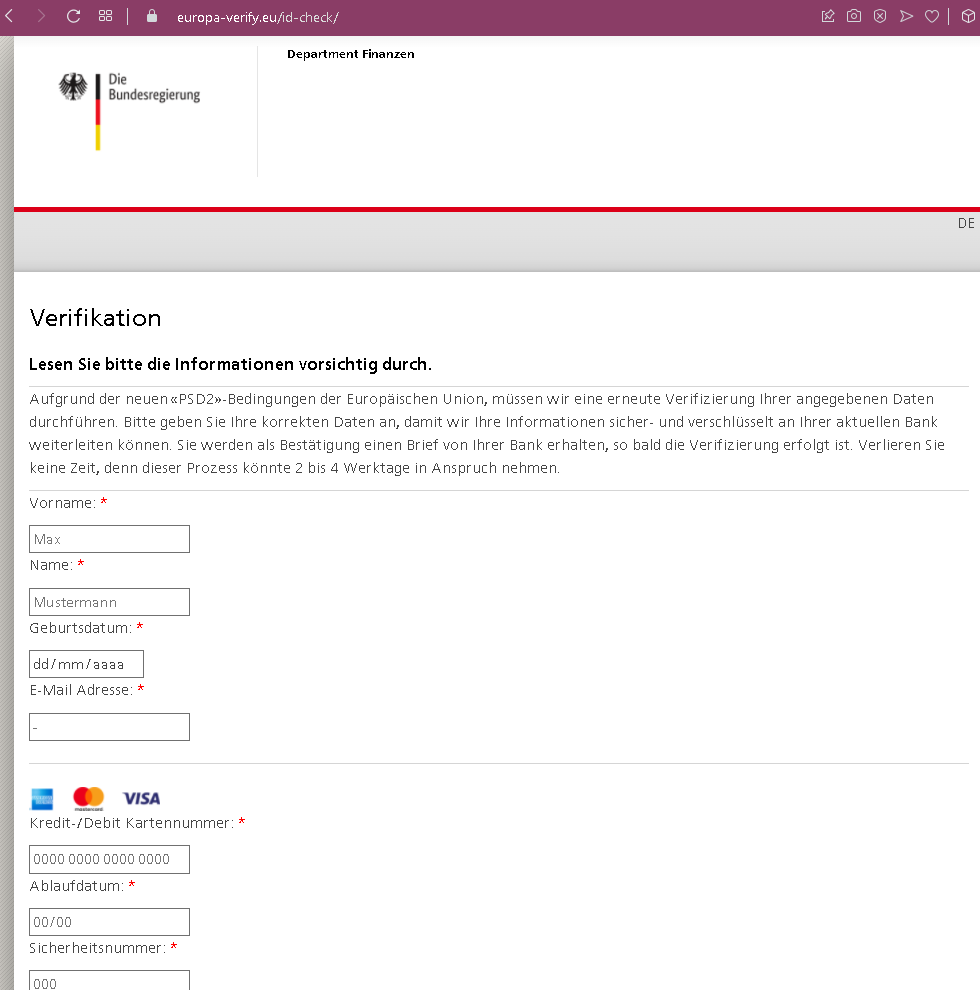
Cybersecurity Measures: How to Avoid Government-Themed Phishing (Germany/Global)
To protect your personal data and banking credentials from fraudulent “Government Support” or “Tax Refund” scams, follow these essential safety rules:
1. Verify the Domain (The “.gov” or “.de” Rule)
Official German government websites always use specific domain structures, such as .bund.de or deutschland.de.
- Action: Phishing sites use deceptive lookalikes like
bund-regelung.com,hilfe-bundesregierung.net, orsoforthilfe-deutschland.org. If the URL does not end in a verified government domain, it is a scam.
2. Beware of “Free Money” or “Compensation” Bait
Scammers use psychological triggers by promising “Financial Aid,” “Energy Relief,” or “Tax Refunds” to induce excitement and lower your guard.
- Action: Government agencies in Germany (like the Finanzamt or Bundesregierung) never notify citizens of refunds or aid via SMS or email links that require immediate credit card input. Official communication is almost always sent via physical mail (Post) or through the secure ELSTER portal.
3. Never Provide Banking Data via Email/SMS Links
A common tactic in this case is asking for your IBAN, Credit Card Number, or Online Banking PIN to “verify your eligibility” for a payout.
- Action: No legitimate government portal will ask for your full credit card CVV code or your bank PIN to send you money. If a site asks for these, it is a “Skimming” operation designed to drain your account.
4. Check the Official Sources Manually
If you hear about a new government support program, do not click the link in a social media ad or message.
- Action: Open a new browser tab and manually search for the program on the official
www.bundesregierung.dewebsite. If the program exists, you will find instructions on how to apply through official, secure channels.
5. Inspect the Language and Legal Notice (Impressum)
Legitimate German sites are legally required to have a detailed Impressum (Legal Notice) and a Datenschutzerklärung (Privacy Policy).
- Action: Phishing sites often have “broken” links for these sections or provide generic, fake information. If the site’s German has grammatical errors or uses an overly urgent tone (e.g., “Handeln Sie jetzt!”), it is a red flag.
6. Use an Ad-Blocker and Safe Browsing
Many of these fake government pages are promoted via “Malvertising” (fake ads in search engines).
- Action: Use a browser with built-in phishing protection and consider an ad-blocker. Always look for the “Ad” or “Sponsored” label in Google search results; scammers often pay to have their fake site appear above the real one.