
The fake Walmart gift card scam utilizes a survey-based phishing method to steal personal identification data and credit card information. This scheme lures victims with the promise of a $1000 gift card, ultimately using a fake “shipping fee” to harvest credit card CVV details for financial skimming.
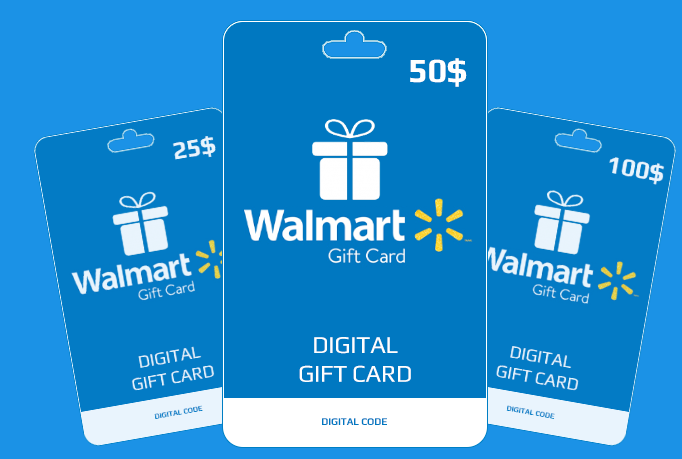
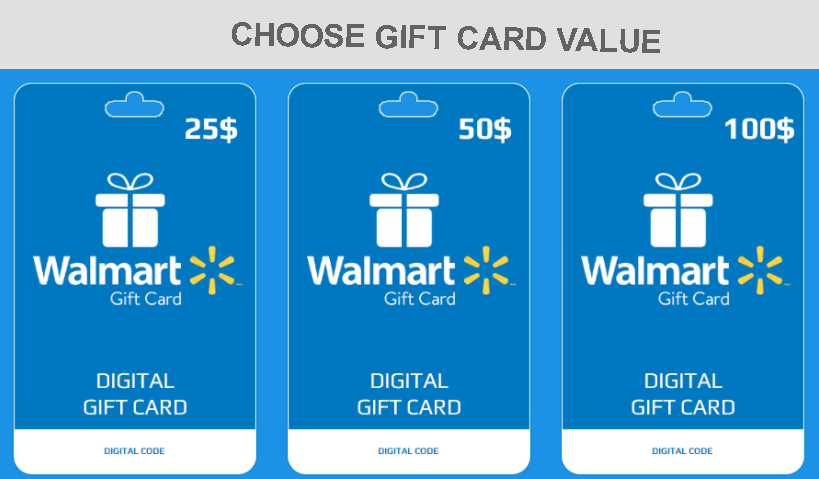
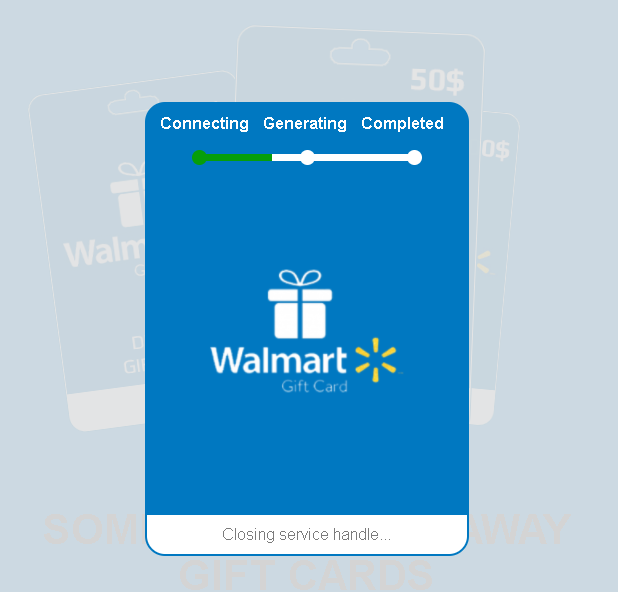
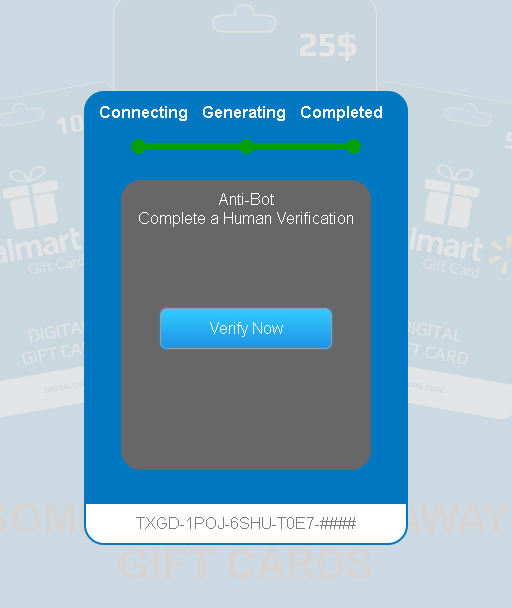
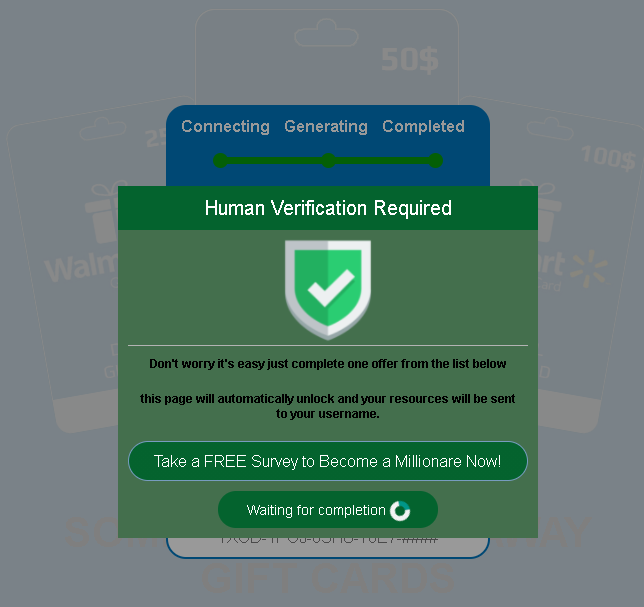






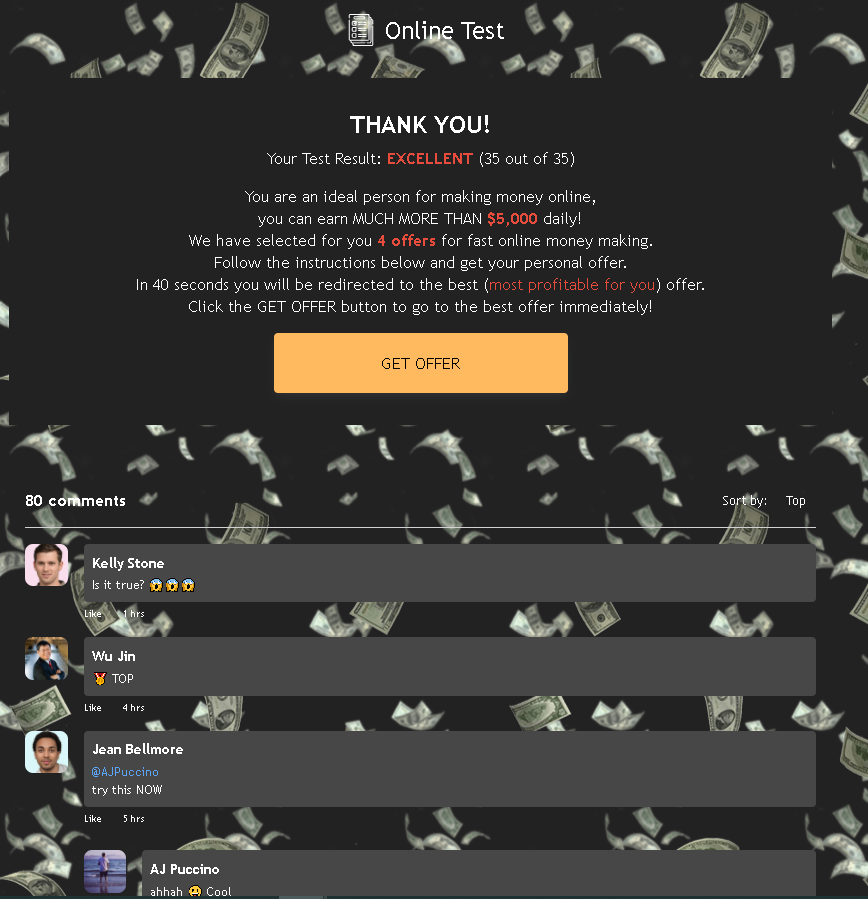
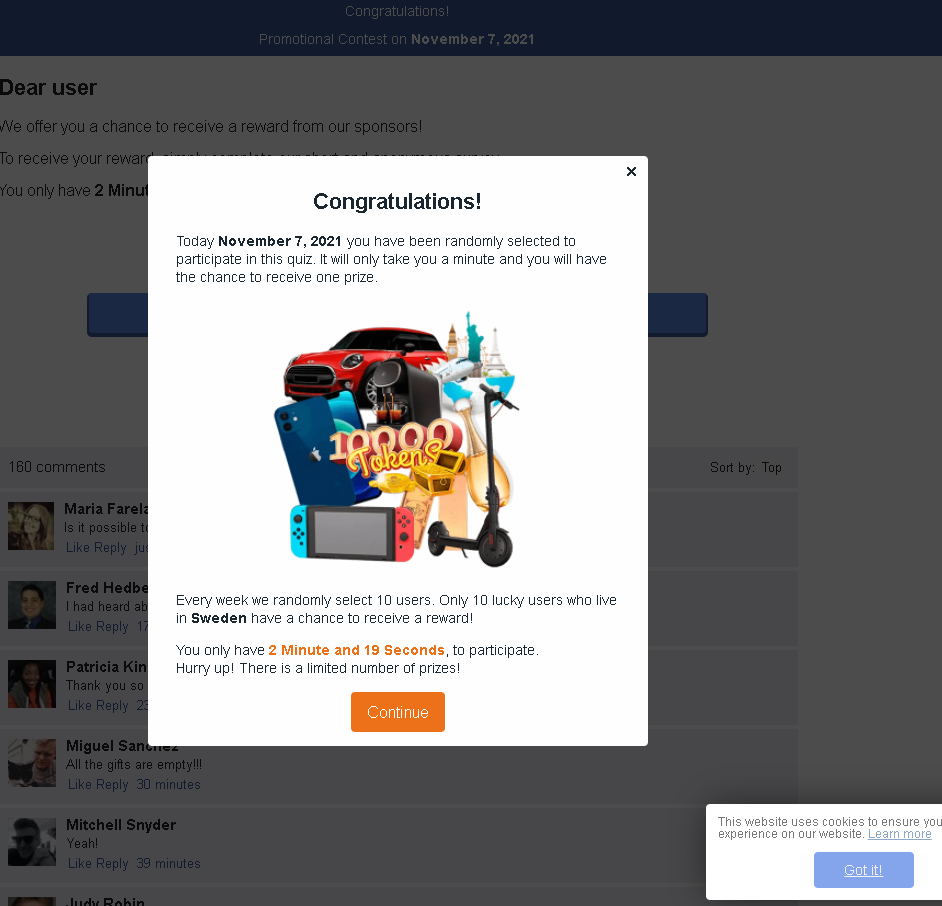
These multiple screenshots show a classic “Walmart Gift Card Giveaway” scam, combined with a fake “online test” and “human verification” loop. The entire flow is designed to trick victims into completing surveys, providing personal information, or signing up for paid offers – with no gift card ever being delivered.
Threat Analysis: Walmart Gift Card Giveaway Scam – Survey / Lead Generation Fraud
How the scam works:
- The Lure (Screenshots with Walmart gift cards)
The victim sees an ad or receives a link promising a free Walmart gift card ($25, $50, or $100). The page displays images of gift cards with “DIGITAL CODE” labels. - The “Choose Value” Page
The victim is asked to select a gift card value ($25, $50, or $100). This creates a sense of choice and personalization. - Fake “Connecting – Generating – Completed” Progress
A loading animation simulates a “generator” process, showing fake progress bars and messages like “Closing service handle…” - Anti‑Bot / Human Verification
The victim is told they need to complete a “human verification” to prove they are not a bot. A fake verification code is displayed. - “Take a FREE Survey to Become a Millionaire”
The victim is redirected to a page claiming they need to complete a survey or offer to unlock the gift card. This is the actual money‑making step for the scammers (affiliate fraud). - Fake Online Test (Multiple pages with questions)
The victim is taken through a series of questions about age, income, employment, financial goals, investment experience, etc. These questions are designed to profile the victim for targeted offers. - “Excellent” Test Result & Redirect
After answering all questions, the victim is told they scored “EXCELLENT” and can earn “MUCH MORE THAN $5,000 daily.” They are then redirected to paid offers, subscription traps, or data harvesting forms.
The goal:
The attacker earns money through:
- Affiliate commissions – when victims sign up for paid offers, credit monitoring services, or loan applications
- Lead generation – collecting personal data (name, email, phone, income level) to sell to marketers or other scammers
- Credit card harvesting – if the final offers require payment details
- Survey completion fees – each completed survey generates revenue for the scammer
Red flags to watch for:
- Free gift card promise: Walmart does not give away gift cards through random online quizzes or “generators.”
- Fake progress bars and verification codes: These are visual tricks to make the process seem technical and legitimate.
- Endless loop of questions and offers: After completing one “verification,” victims are often asked to complete another, with no gift card ever received.
- Requests for personal information (age, income, employment): These are not needed to claim a gift card.
- Fake comments and timestamps: The “80 comments” section with generic usernames and “1 hour ago” timestamps is fabricated to create social proof.
- Cookie notice: The presence of a cookie consent pop‑up is an attempt to look like a legitimate website.
What to do if you encounter this:
- Do not click any buttons, answer any questions, or provide any personal information.
- Do not enter any credit card details or sign up for any offers.
- Close the page immediately. No legitimate gift card giveaway requires completing surveys or offers.
- If you have already entered payment information, contact your bank immediately.
Protective measures:
- Remember: if it seems too good to be true, it is a scam. Walmart does not give away free gift cards through random websites.
- Never complete “human verification” offers – these are always scams designed to generate affiliate revenue or steal data.
- Use an ad blocker to avoid such scam ads.
- Do not trust fake comments – scammers can easily fabricate likes, replies, and timestamps.