
This screenshot shows a classified ad for a luxury vehicle (Mercedes-Benz Rapido motorhome) with a suspiciously low price (£7,800), urgent tone, and a request to contact the seller directly via email. This is a common setup for vehicle sale scams, often leading to advance fee fraud or phishing.
Analysis Memo: This malicious interface was detected, analyzed, and contained firsthand by the
Antiphishing.bizsecurity team during our automated link scanning workflows. To protect the public, the hostile origin link has been completely disabled within our infrastructure. We document and analyze these live visual patterns to help security researchers and users spot lookalike phishing methods before financial damage occurs.
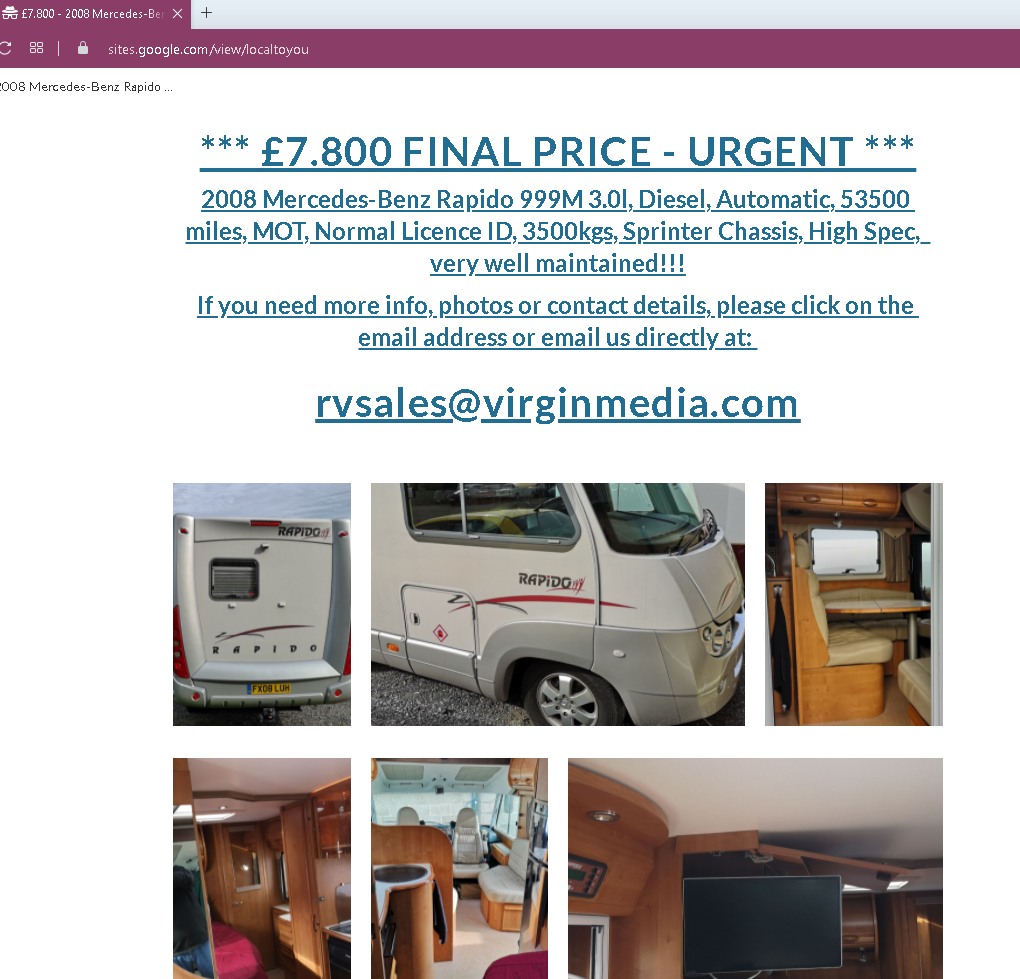
Threat Analysis: Vehicle Sale Scam – Fake Ad / Advance Fee Fraud
How the scam works:
The victim sees an ad (on a classified site, social media, or marketplace) for a high‑value vehicle at an extremely low price. The ad includes an urgent message (“FINAL PRICE – URGENT”) and a request to contact the seller directly via email. When the victim responds, the scammer typically:
- Claims the vehicle is located abroad (or far away) and can be shipped
- Asks for a deposit or full payment via bank transfer, PayPal (Friends & Family), or gift cards
- Sends fake invoices, shipping documents, or escrow service links that are actually fraudulent
- May ask for personal information (name, address, ID) for “paperwork”
After the victim sends money, the vehicle never arrives, and the scammer disappears.
The goal:
The attacker aims to:
- Collect an upfront payment (deposit or full amount) that is never returned
- Obtain personal information for identity theft
- Redirect the victim to a phishing page disguised as an escrow or payment service
Red flags to watch for:
- Too‑good‑to‑be‑true price: A 2008 Mercedes-Benz motorhome with low mileage (£7,800) is far below market value. Legitimate vehicles of this type cost £20,000–£50,000 or more.
- Urgency (“URGENT”, “FINAL PRICE”): Classic pressure tactic to prevent the victim from researching or thinking critically.
- Request to contact via email directly: Legitimate classified platforms encourage communication through the platform to protect buyers. Sellers who insist on direct email are often scammers.
- Generic email address:
[email protected]is a free email service, not a business domain. A legitimate seller would use a professional or platform‑linked contact method. - No verifiable details: The ad lacks specific location, VIN, service history, or other verifiable information that a real seller would provide.
What to do if you encounter this:
- Do not reply to the email or send any money.
- Do not provide any personal or financial information.
- If you are looking to buy a vehicle, always:
- Inspect it in person
- Use secure payment methods (e.g., escrow, credit card with buyer protection)
- Avoid paying deposits for vehicles you have not seen
- Report the ad to the platform where it was posted (e.g., Facebook Marketplace, Gumtree, eBay).
Protective measures:
- If the price seems too good to be true, it is a scam.
- Never send money for a vehicle you have not seen in person.
- Use reverse image search on the vehicle photos – scammers often reuse images from real ads.
- Verify the seller’s identity – ask for video call, local registration, or meet in a public place.
- Be suspicious of any urgent sale that requires payment before delivery.