
This screenshot shows a phishing page impersonating Crédit Mutuel de Bretagne, a French bank. The page threatens a “temporary ban on all debit operations” to pressure victims into providing sensitive personal and banking information.
Analysis Memo: This deceptive layout was detected, analyzed, and contained firsthand by the Antiphishing.biz security team during our daily link moderation procedures. To protect the public, the dangerous destination URL has been safely deactivated within our infrastructure. We document and analyze these live visual patterns to help security researchers and users spot lookalike phishing methods before financial damage occurs.
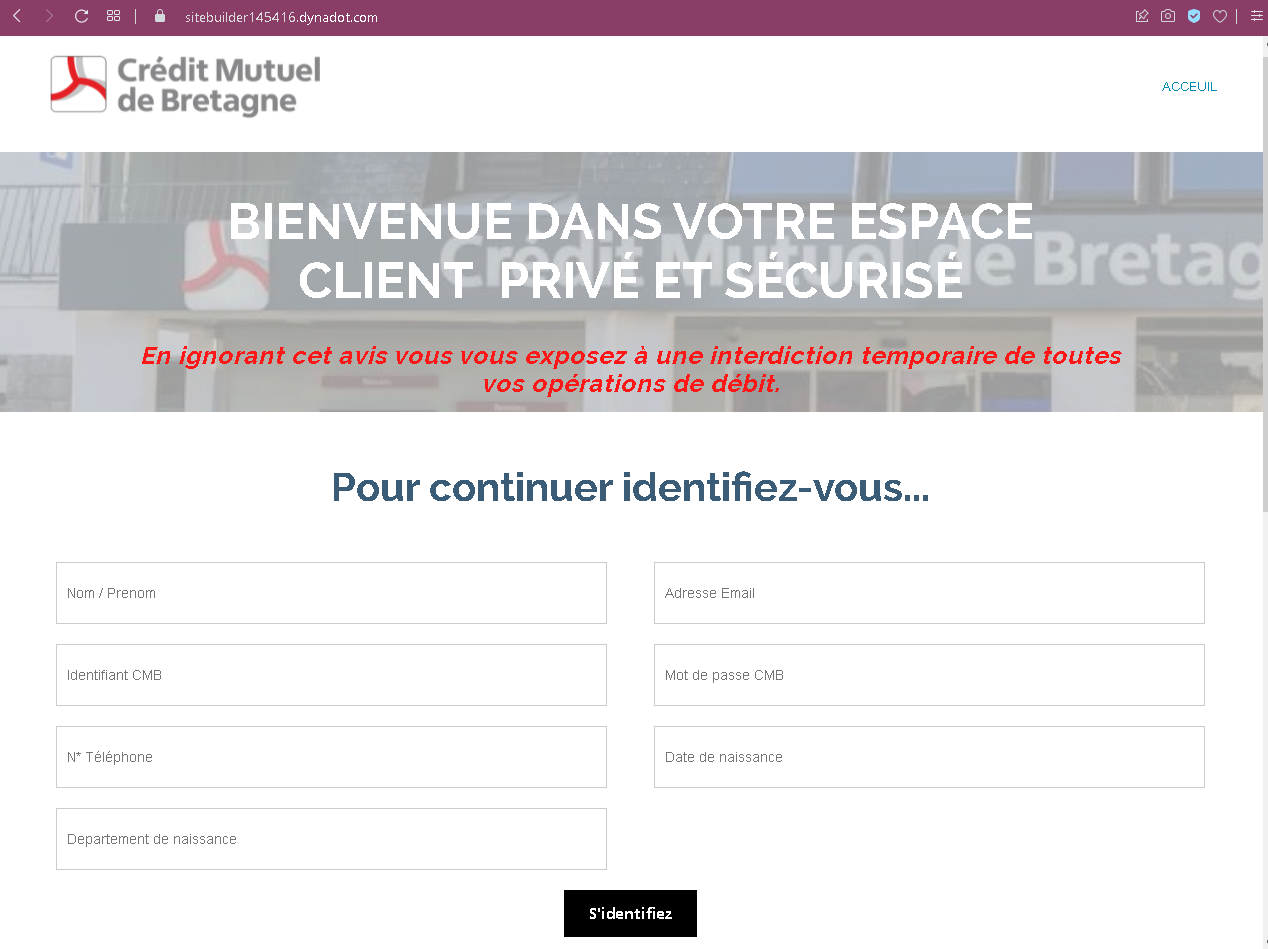
Threat Analysis: Crédit Mutuel de Bretagne Phishing – Full Identity & Banking Credential Harvesting
How it works:
The victim receives a phishing email, SMS, or other message claiming a security alert or account restriction. The link leads to this page, which mimics the bank’s client space. The victim is asked to provide:
- First and last name
- Email address
- Identifiant CMB (online banking username)
- Mot de passe CMB (password)
- Phone number
- Date of birth
- Department of birth
A threat is displayed: ignoring the notice will result in a temporary ban on all debit operations – a classic fear tactic.
The goal:
The attacker collects:
- Online banking credentials (identifier and password)
- Full personal identity information (name, DOB, birth department, phone, email)
- Enough data to potentially answer security questions or commit identity theft
With this information, the attacker can:
- Log into the victim’s Crédit Mutuel online banking account
- Authorize fraudulent transfers or payments
- Use personal details for identity fraud or to impersonate the victim
Red flags to watch for:
- Suspicious URL: The page is hosted on a subdomain of
dynadot.com(a domain registrar), not oncreditmutuel.fror an official Crédit Mutuel domain. - Threat of immediate consequences: The warning of a “temporary ban on all debit operations” is a fear tactic to pressure victims into acting without thinking.
- Excessive data requests: A legitimate bank login does not ask for full name, email, phone, date of birth, and department of birth all on the same page. This is a clear sign of a phishing kit designed to harvest as much personal data as possible.
- Unsolicited login request: Crédit Mutuel does not send links requiring customers to log in to avoid account restrictions.
- Poor design / generic layout: The page lacks the full branding, security notices, and two‑factor authentication features of the real Crédit Mutuel portal.
What to do if you encounter this:
- Do not enter any personal or banking information.
- If you are a Crédit Mutuel customer, always access your account by typing the official website URL directly (e.g.,
creditmutuel.fror your regional branch’s domain). - If you have already entered your credentials, contact Crédit Mutuel immediately to change your password and secure your account.
- Report the phishing page to Crédit Mutuel’s fraud team.
Protective measures:
- Bookmark the official Crédit Mutuel login page and use that bookmark.
- Use a password manager – it will autofill only on legitimate domains.
- Enable two‑factor authentication on your bank account if available.
- Never provide your date of birth, phone number, and banking credentials in response to a threat‑based message.
- Be suspicious of any unsolicited message that threatens account restrictions and asks you to log in via a link.