
Phishing Alert: The “Fake Buyer” Marketplace Scam
This screenshot demonstrates a common and dangerous phishing tactic used on classifieds and marketplace platforms (like Carousell, Olx, or Avito).
Incident Report: This malicious interface was intercepted, verified, and locked down firsthand by the
Antiphishing.bizsecurity team during our daily link moderation procedures. To protect the public, the phishing source domain has been fully defanged within our infrastructure. We document and analyze these live visual patterns to help security researchers and users detect replica fraud techniques before financial damage occurs.
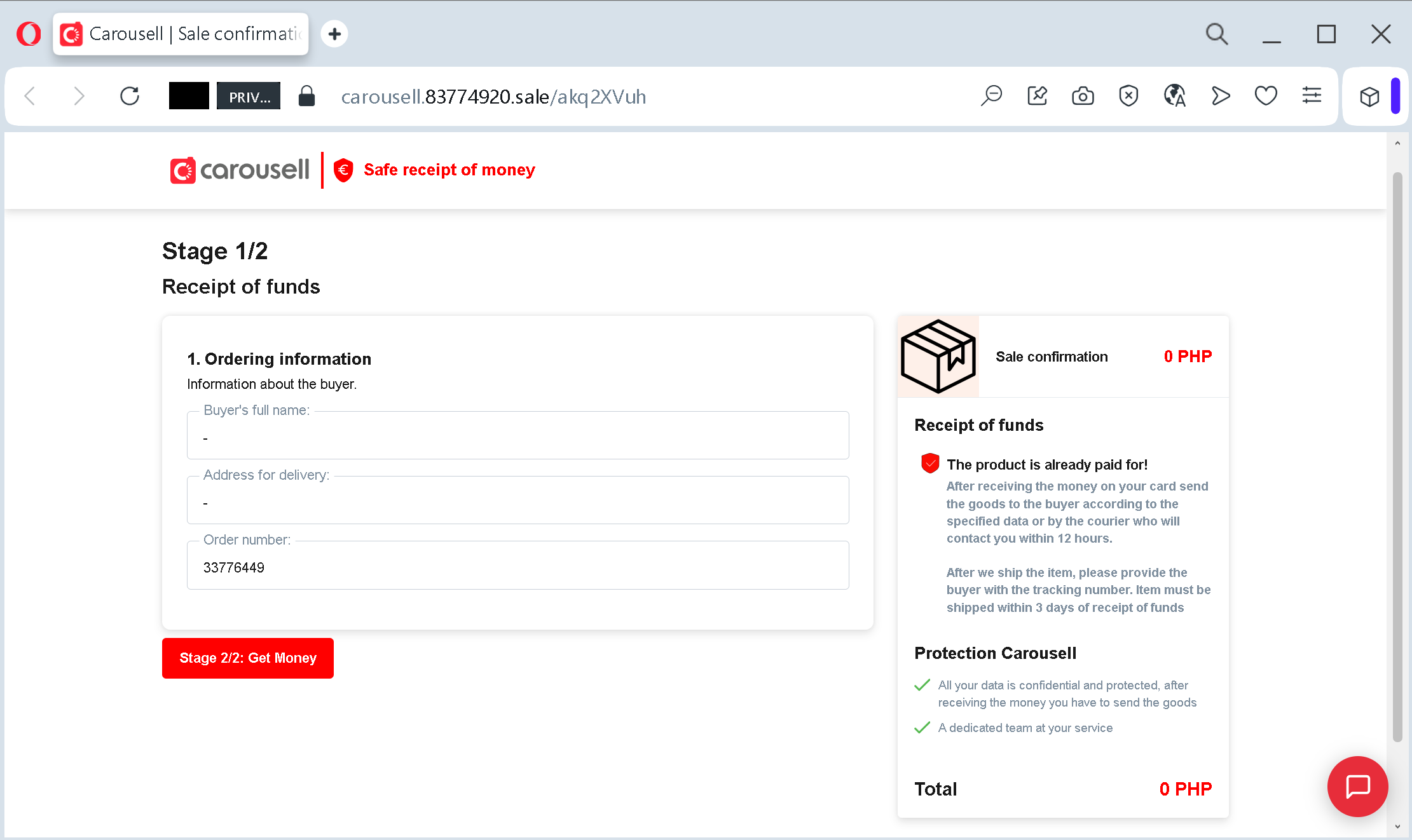
Here is a breakdown of how this scam works to steal your banking information:
1. The Domain Deception
Look closely at the URL: carousell.83774920.sale/….
- The Trap: Scammers use a subdomain that includes the brand name (carousell) to create a false sense of security.
- The Reality: The actual domain is
83774920.sale. Official Carousell transactions will never happen on a random numeric domain or a .sale extension. They always stay withincarousell.phor the official app.
2. The Emotional Hook: “Receipt of Funds”
The page is designed to look like a legitimate “Safe Receipt of Money” portal.
- The Tactic: The scammer contacts a seller and claims they have already paid for the item. They send this link to the seller, claiming it’s the only way to “accept” or “receive” the money.
- The Red Flag: Legitimate marketplaces do not require you to enter your full card details or address on a third-party link to receive a payment.
3. Psychological Manipulation
- Urgency: The text states the item “must be shipped within 3 days,” pushing the victim to act quickly.
- False Protection: Using terms like “Protection Carousell” and “Dedicated team” is a social engineering trick to make the victim lower their guard.
- The “Get Money” Button: The bright red button “Stage 2/2: Get Money” is the final trap. Clicking it will typically lead to a fake bank login page or a form asking for your card number, CVV, and SMS OTP.
How to Stay Safe:
- Stay on the App: Never follow links sent by buyers in external messengers (WhatsApp, Viber, Telegram).
- Verify the URL: Always check the main domain. If it’s not the official platform address, it’s a scam.
- No Card Info for Receiving: You do not need to provide your CVV or a one-time password (OTP) to receive money. These are only for sending money.
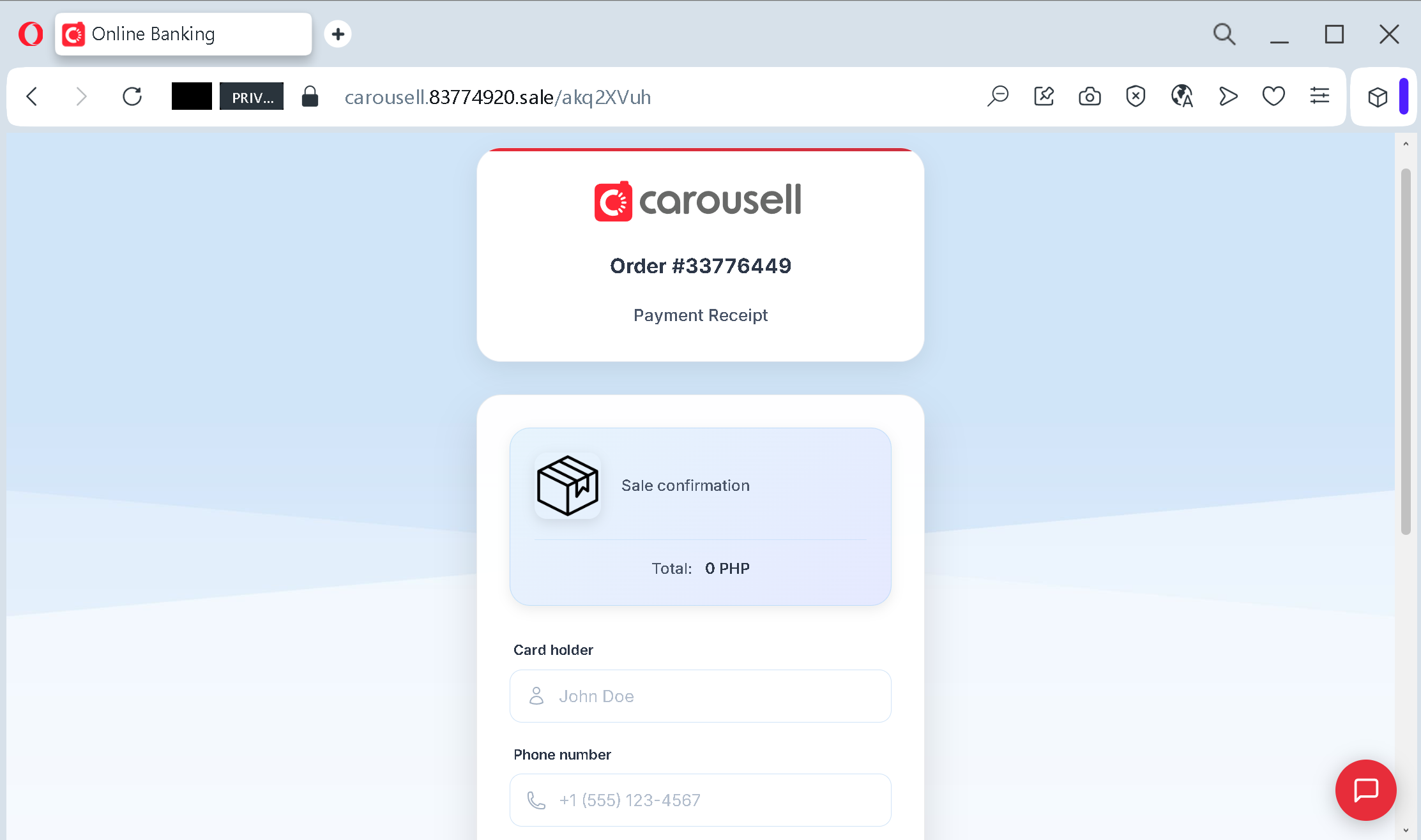
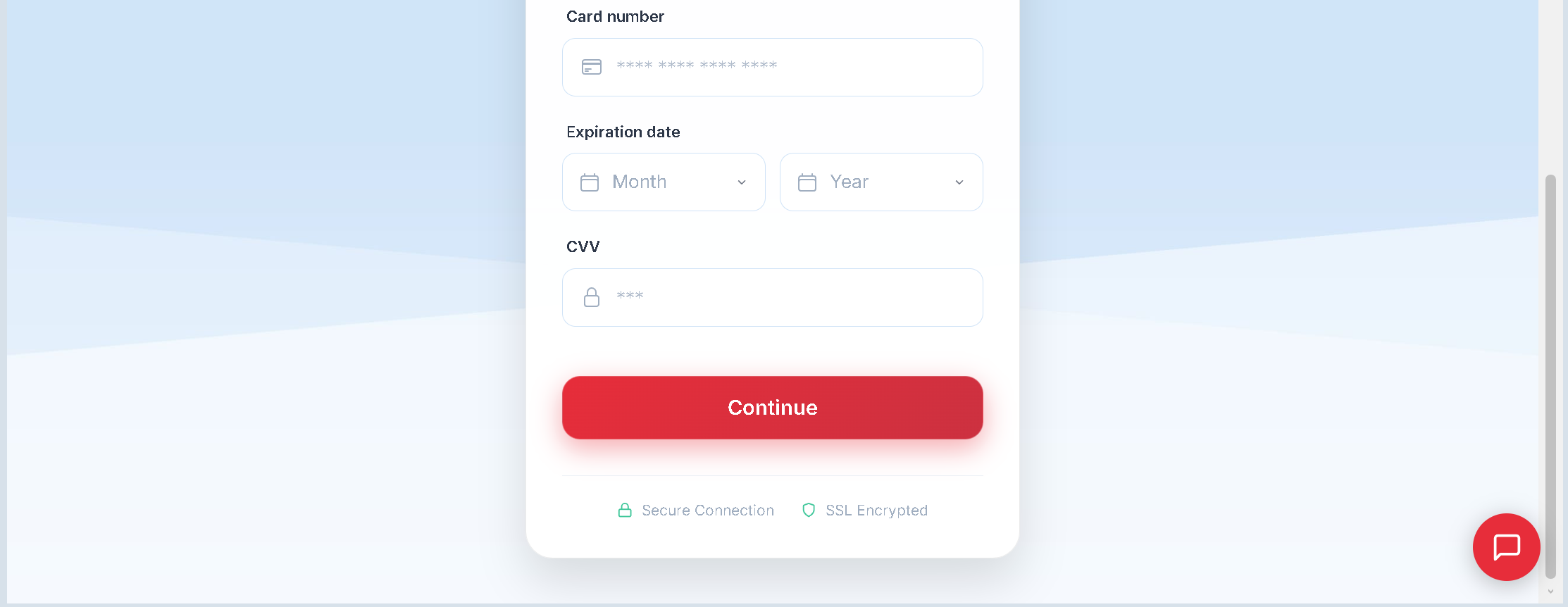
Phishing Scheme: Fake “Safe Payment” Receipt
How the scam works:
The Approach: A scammer contacts a seller on a marketplace (Carousell), posing as a legitimate buyer. They claim to have already made the payment through the platform’s internal “safe deal” system.
The Link: The scammer sends a generated link (like the one above) via an external messenger (WhatsApp/Viber), claiming it’s the official “Receipt of Funds” page.
The Trap: The page looks identical to the official marketplace design. It displays a “Stage 1/2: Receipt of Funds” form, asking the seller to confirm their details.
The Theft: When the seller clicks “Get Money,” they are redirected to a fake payment gateway that asks for Full Card Number, Expiry Date, CVV, and even an SMS OTP (One-Time Password). Instead of receiving funds, the victim’s account is drained.
Warning Signs:
External Links: Official platforms never send payment links via third-party messengers.
Fake Domain: Always check the root domain. In this case, it is 83774920.sale, which has nothing to do with the official carousell.ph.
Receiving Money Doesn’t Require CVV: You never need to provide your card’s CVV or an SMS confirmation code to receive a payment.