
Scammers are targeting UK drivers with a fake DVLA vehicle tax renewal phishing campaign designed to steal personal and financial details. The attack uses urgent SMS or email messages to drive victims to a convincing, counterfeit GOV.UK site that demands payment and sensitive security information to avoid bogus fines. To stay safe, ignore unexpected notifications, only use the official gov.uk website to check tax status, and report suspicious messages to relevant authorities.
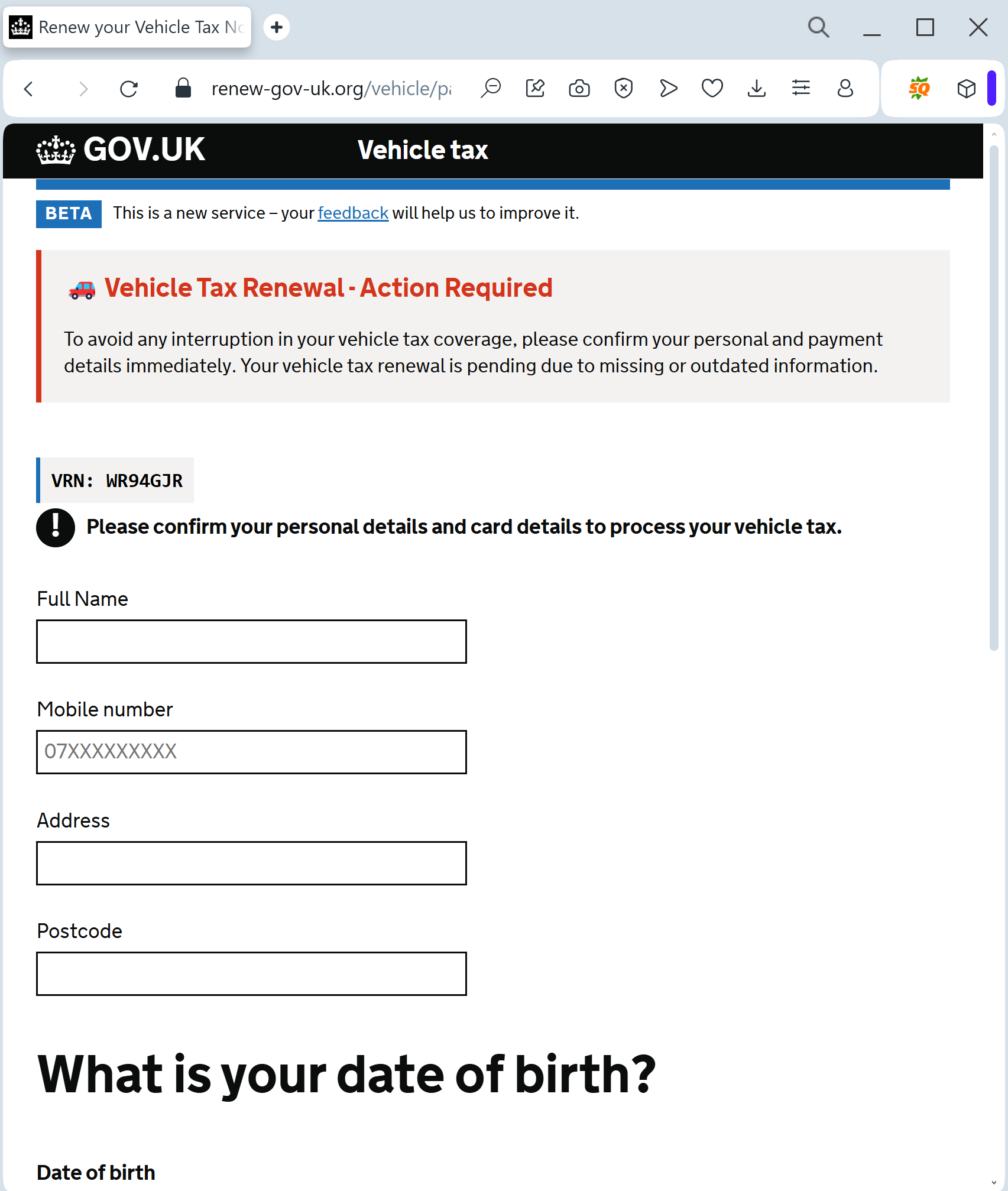
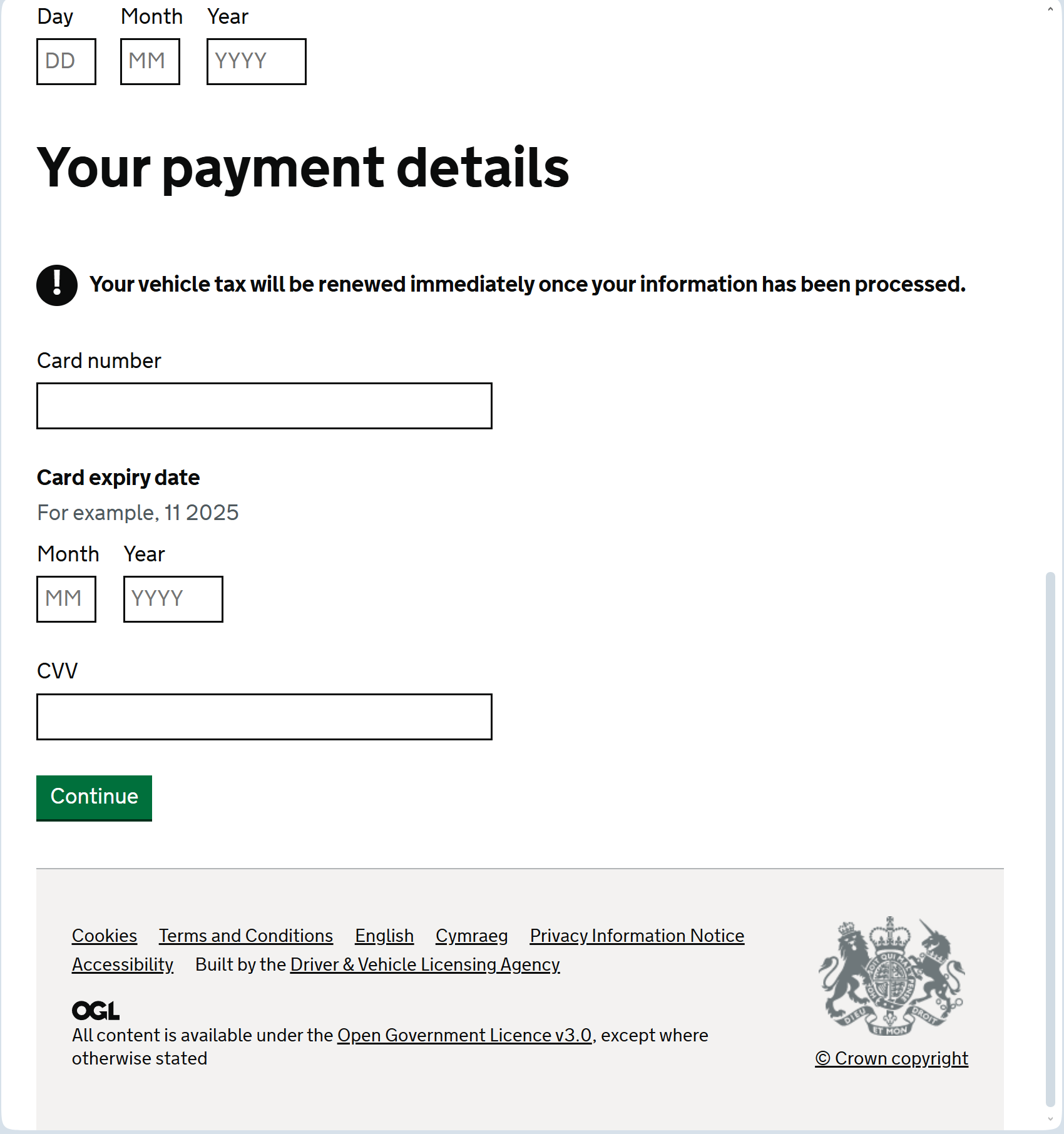
Target: Vehicle Owners in the UK and Ireland
Threat Level: High (Credit Card Skimming & Identity Theft)
Phishing Method Description
This attack uses Government Impersonation to mimic the official DVLA (Driver and Vehicle Licensing Agency) or Department of Transport portals. Victims receive an urgent SMS (Smishing) or Email stating that their “Vehicle Tax has expired” or that a “Tax Refund” is waiting to be claimed.
The link leads to a highly convincing clone of the official government website. To “renew” the tax or “claim the refund,” the victim is prompted to enter:
Vehicle Registration Number (To build trust)
Full Name and Home Address
Date of Birth
Credit/Debit Card Details (Number, Expiration Date, and CVV)
Mother’s Maiden Name (Used for further identity theft)
⚠️ Red Flags to Watch For
The URL Trap: Official UK government sites always end in .gov.uk. Phishing sites use deceptive addresses like renew-tax-service.com, dvla-refund-online.net, vehicle-tax-gov.org, or free hosting platforms.
Urgent & Threatening Tone: Messages often say, “Your vehicle is no longer taxed” or “Failure to pay will result in a fine,” forcing the victim to act without verifying the source.
Unexpected Refunds: Be wary of any “Tax Refund” notifications. Governments rarely send unsolicited links via SMS to distribute money; they usually credit your bank account or send a cheque.
🛡️ How to Protect Yourself
The .gov.uk Rule: Before entering any data, check the address bar. If it doesn’t end in .gov.uk, it is 100% a scam.
Access via Official Portal: If you are unsure about your tax status, go directly to www.gov.uk/check-vehicle-tax. Never use a link from an SMS.
The SMS Sender Check: Official government alerts don’t come from personal mobile numbers. If the sender is an unknown 10-digit number, delete it.
Report the Scam: You can report UK government phishing by forwarding suspicious emails to [email protected] or SMS to the short code 7726.
💡 Expert Security Tip:
Government agencies like the DVLA will never send you a link via text message to ask for your bank details or to offer a refund. Treat any unsolicited SMS regarding “Vehicle Tax” as a threat. Real tax renewals are handled via post or the official secure portal you access yourself.