
Analysis Memo: This deceptive layout was logged, cross-checked, and neutralized firsthand by the
Antiphishing.bizsecurity team during our automated link scanning workflows. To protect the public, the dangerous destination URL has been completely disabled within our infrastructure. We document and analyze these live visual patterns to help security researchers and users spot lookalike phishing methods before financial damage occurs.
eBay / Kleinanzeigen Phishing – Fake “Ticket Sold” & Card Harvesting Scam (German Variant)
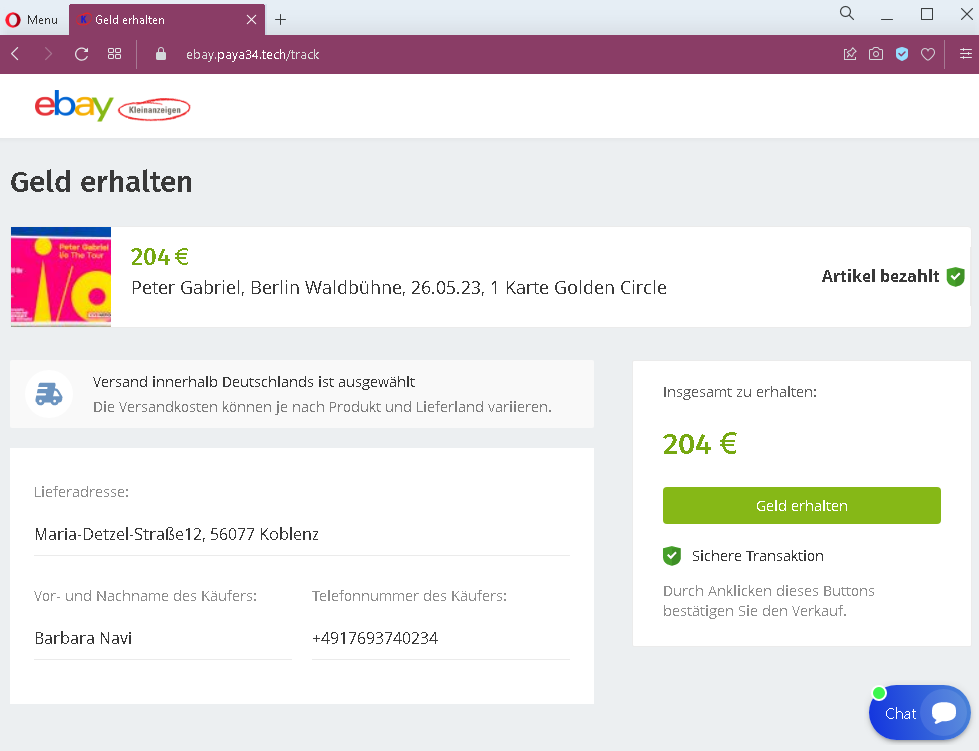
This phishing campaign impersonates eBay (or the German eBay Kleinanzeigen platform) to target sellers. The scam creates a fake “item paid” page for a high-demand concert ticket, then directs the seller to a credit card harvesting form under the guise of “receiving” payment.
How it works:
A seller receives a message—likely via the platform’s messaging system—from a supposed buyer claiming to have paid for a listed item. The message includes a link to the first phishing page.
Step 1 – Fake “Item Paid” Confirmation Page
The first page displays:
- A heading suggesting funds are ready to be received
- A specific event: a concert ticket (Peter Gabriel in Berlin) with a price in euros (€204)
- A statement that the item has been paid
- Fabricated buyer details, including a name, phone number, and shipping address in Germany
- A prominent button implying the seller can claim or receive the money
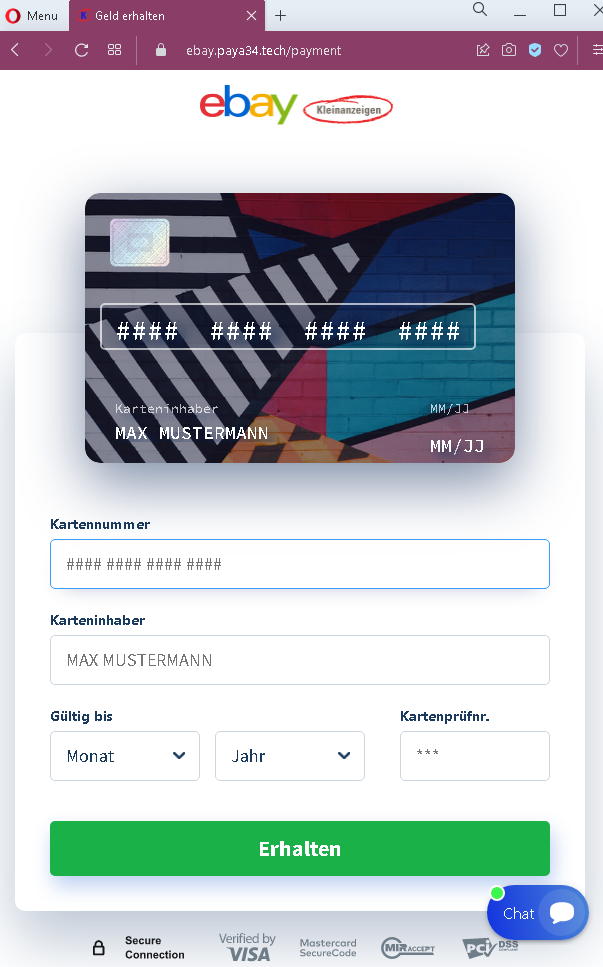
Step 2 – Credit Card Harvesting Page
After clicking the button, the seller is taken to a second page that:
- Uses eBay branding
- Requests full credit card details: cardholder name, card number, expiration date, and (implied) security code
- Includes payment brand logos (Visa, Mastercard) and a “Secure Connection” badge to appear trustworthy
The goal:
The attacker steals the seller’s credit card details. There is no actual buyer or payment—the entire transaction is fabricated. The concert ticket and the €204 price are realistic, making the scam plausible.
Red flags to watch for:
- Illogical request for card details: A seller receiving money should never be asked to enter their credit card number, expiration date, and security code. Receiving funds requires bank account details (IBAN) or a linked payout method—not card credentials.
- No eBay Kleinanzeigen branding on first page: The first page lacks clear eBay Kleinanzeigen branding, despite referencing a sale. The second page uses generic eBay branding, but the flow is inconsistent with how the platform actually processes payments.
- Suspicious URL: The pages are hosted on a domain that is not
ebay.deebay-kleinanzeigen.de - Fake buyer details: The provided buyer address and phone number are likely fabricated. In legitimate transactions on eBay Kleinanzeigen, payment is typically handled in person or via direct bank transfer—not through a third-party payment page.
- No account login required: A legitimate sale would appear in the seller’s account dashboard after logging in. This scam bypasses account authentication entirely.
- Generic card form: The second page lacks integration with eBay’s actual payment systems (such as the platform’s integrated checkout) and uses a generic form design.
What to do if you encounter this:
- Do not click the button to “receive” money.
- Do not enter your credit card details, cardholder name, expiration date, or security code on such pages.
- If you are selling on eBay Kleinanzeigen or similar platforms, always log into your account directly (by typing the official URL) to check for real sales and messages.
- Never trust links sent by buyers claiming they have paid—especially those directing you to external pages.
- If you have already entered your credit card details, contact your bank immediately to block the card and dispute any unauthorized charges.
- Report the phishing page to the platform’s support team.
Why this scam is effective:
The German classifieds market is active, and concert tickets for popular artists like Peter Gabriel are frequently sold second-hand. The €204 price is realistic for a “Golden Circle” ticket. Sellers are often eager to complete a sale quickly. The use of the eBay brand on the second page (even if generic) adds a layer of false familiarity for German users.
Protective measures:
- Always verify any sale by logging directly into your account (e.g., eBay Kleinanzeigen)—never through a link sent in a message.
- Never enter credit card details to receive payment. Sellers provide payout details (bank account) during account setup; payments are processed automatically or arranged in person.
- Be suspicious of any message that creates urgency or claims payment is already “waiting” but requires you to click an external link.
- If a buyer sends you a link to “claim” payment, treat it as a red flag and verify directly through the platform’s official app or website.
- On eBay Kleinanzeigen, prefer local, cash-on-pickup transactions for high-value items. If shipping, use the platform’s integrated payment system (if available) or a traceable bank transfer—never a link-based “card” form.