
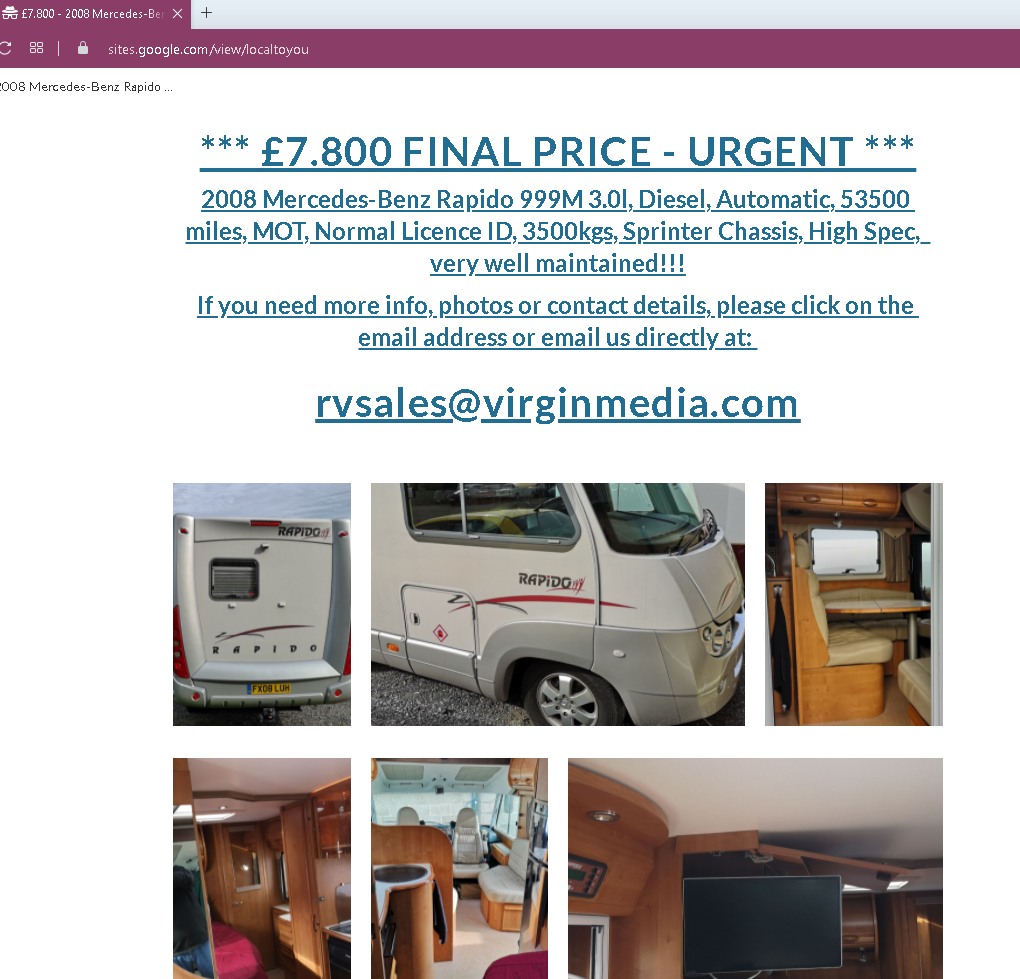
This screenshot shows a classified ad for a luxury vehicle (Mercedes-Benz Rapido motorhome) with a suspiciously low price (£7,800), urgent tone, and a request to contact the seller directly via email. This is a common setup for vehicle sale scams, often leading to advance fee fraud or phishing.
Threat Analysis: Vehicle Sale Scam – Fake Ad / Advance Fee Fraud
How the scam works:
The victim sees an ad (on a classified site, social media, or marketplace) for a high‑value vehicle at an extremely low price. The ad includes an urgent message (“FINAL PRICE – URGENT”) and a request to contact the seller directly via email. When the victim responds, the scammer typically:
- Claims the vehicle is located abroad (or far away) and can be shipped
- Asks for a deposit or full payment via bank transfer, PayPal (Friends & Family), or gift cards
- Sends fake invoices, shipping documents, or escrow service links that are actually fraudulent
- May ask for personal information (name, address, ID) for “paperwork”
After the victim sends money, the vehicle never arrives, and the scammer disappears.
The goal:
The attacker aims to:
- Collect an upfront payment (deposit or full amount) that is never returned
- Obtain personal information for identity theft
- Redirect the victim to a phishing page disguised as an escrow or payment service
Red flags to watch for:
- Too‑good‑to‑be‑true price: A 2008 Mercedes-Benz motorhome with low mileage (£7,800) is far below market value. Legitimate vehicles of this type cost £20,000–£50,000 or more.
- Urgency (“URGENT”, “FINAL PRICE”): Classic pressure tactic to prevent the victim from researching or thinking critically.
- Request to contact via email directly: Legitimate classified platforms encourage communication through the platform to protect buyers. Sellers who insist on direct email are often scammers.
- Generic email address:
[email protected]is a free email service, not a business domain. A legitimate seller would use a professional or platform‑linked contact method. - No verifiable details: The ad lacks specific location, VIN, service history, or other verifiable information that a real seller would provide.
What to do if you encounter this:
- Do not reply to the email or send any money.
- Do not provide any personal or financial information.
- If you are looking to buy a vehicle, always:
- Inspect it in person
- Use secure payment methods (e.g., escrow, credit card with buyer protection)
- Avoid paying deposits for vehicles you have not seen
- Report the ad to the platform where it was posted (e.g., Facebook Marketplace, Gumtree, eBay).
Protective measures:
- If the price seems too good to be true, it is a scam.
- Never send money for a vehicle you have not seen in person.
- Use reverse image search on the vehicle photos – scammers often reuse images from real ads.
- Verify the seller’s identity – ask for video call, local registration, or meet in a public place.
- Be suspicious of any urgent sale that requires payment before delivery.