
This screenshot shows a Thai‑language phishing page impersonating Facebook. The page asks for the victim’s mobile phone number or email address and password to log in, then steals the credentials.
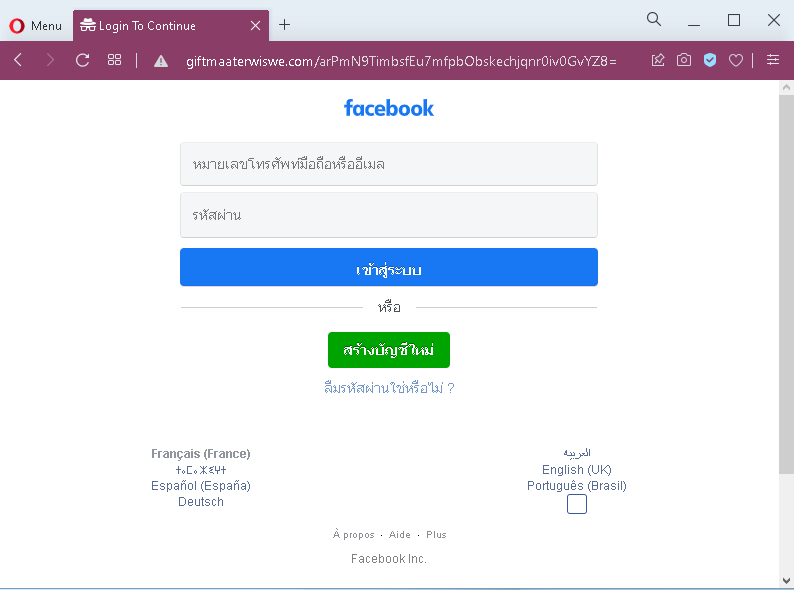
Threat Analysis: Facebook Phishing – Credential Harvesting (Thai Variant)
How it works:
The victim receives a phishing email, SMS, or social media message claiming a security alert, account verification, or the need to log in to claim a reward or view restricted content. The link leads to this page, which mimics the Facebook login interface. The victim is asked to enter their mobile number or email and password, then click the login button (labeled “เข้าสู่ระบบ” – Log In). The credentials are captured and sent to the attacker.
The goal:
The attacker steals Facebook account credentials to:
- Take over the victim’s Facebook account
- Access private messages and personal information
- Post spam or malicious links from a trusted account
- Use the account to spread further phishing messages to friends
- Attempt credential reuse on other platforms (email, banking, etc.)
Red flags to watch for:
- Suspicious URL: The page is hosted on a domain that is not
facebook.com. Legitimate Facebook login pages are only on official Facebook domains. - Unsolicited login request: Facebook does not send links requiring users to log in to resolve account issues or claim prizes.
- Minimal design / missing security features: While the page copies Facebook’s layout, it lacks the full navigation, security notices, and two‑factor authentication options present on the real site.
- No personalization or saved account info: A real Facebook login often displays a profile photo or remembered account – this page does not.
What to do if you encounter this:
- Do not enter your mobile number, email, or password.
- If you have already entered your credentials, change your Facebook password immediately and enable two‑factor authentication (2FA). Also check for any unauthorized activity or connected apps.
- Always access Facebook by typing
facebook.comdirectly into your browser.
Protective measures:
- Bookmark the official Facebook login page and use that bookmark.
- Use a password manager – it will autofill only on legitimate
facebook.comdomains. - Enable two‑factor authentication on your Facebook account.
- Be suspicious of any unsolicited message that asks you to log in via a link.