
Incident Report: This spoofed page was intercepted, verified, and locked down firsthand by the
Antiphishing.bizsecurity team during our automated link scanning workflows. To protect the public, the phishing source domain has been safely deactivated within our infrastructure. We document and analyze these live visual patterns to help security researchers and users detect replica fraud techniques before financial damage occurs.
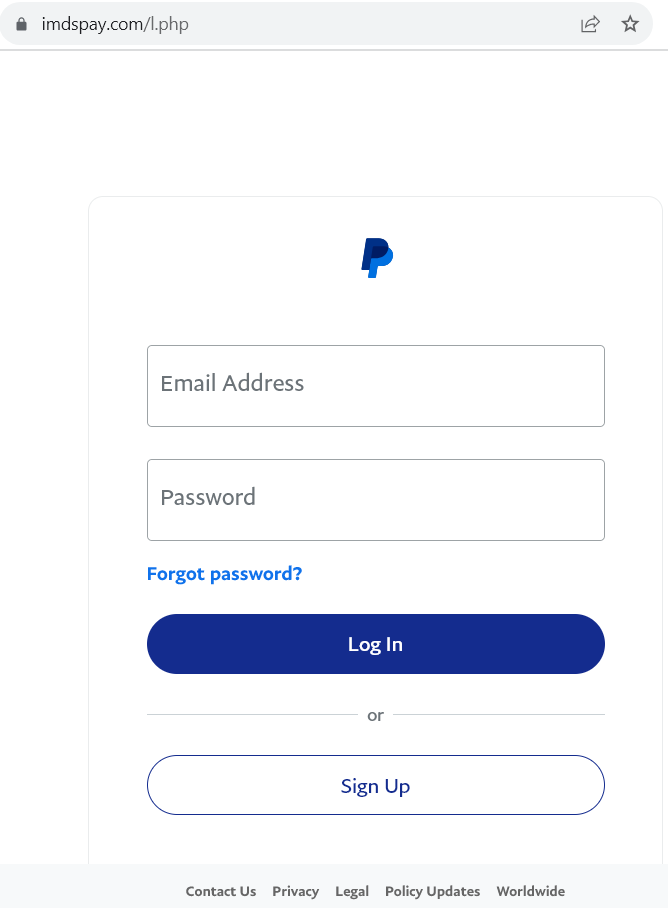
PayPal “Account Suspension Alert” Phishing
Target: PayPal Users Worldwide
Threat Level: Critical (Financial & Full Identity Theft)
Phishing Method Description
This attack uses a “High-Pressure Security” pretext. Victims receive an email or SMS (Smishing) claiming that “Your account has been temporarily suspended” or that “Unusual activity was detected on your account.” To “restore full access” or “cancel a fraudulent payment,” the victim is pressured to click a link and complete a verification process.
The link leads to a sophisticated, multi-step phishing portal that mimics the official PayPal login flow. This “Fullz” kit is designed to harvest:
PayPal Credentials (Email and Password)
Full Personal Identity (Name, Date of Birth, and Home Address)
Credit/Debit Card Details (Number, Expiration Date, and CVV)
Bank Account Information
Security Challenge Answers: Intercepted to bypass future password recovery attempts.
Red Flags to Watch For
Deceptive Domain: The official domain is strictly paypal.com. Phishing sites use lookalikes such as verify-paypal-secure.com, account-resolution-paypal.net, or free subdomains like paypal-limit.web.app.
Generic Salutation: Official PayPal emails almost always address you by your full name. Be wary of emails starting with “Dear Customer,” “Dear Member,” or just your email address.
Requesting Card Details to “Unlock”: PayPal will never ask you to enter your full credit card number and CVV code just to “verify” your identity or unlock a login.
How to Protect Yourself
The “Login Direct” Rule: Never click a link in an email to log into PayPal. Always open a new browser tab and manually type ://paypal.com or use the official PayPal App.
Check the Message Center: If there is a real issue with your account, a notification will always be waiting for you in the secure “Message Center” inside your PayPal account.
2FA is Mandatory: Enable Two-Factor Authentication (2FA). Even if scammers steal your password, they won’t be able to log in without the code from your authenticator app or SMS.
Forward to Spoof: You can report PayPal-branded phishing by forwarding the suspicious email or link to spoof@paypal.com.
Expert Security Tip:
The “Fullz” Harvesting HazardThe Method:
This case highlights a Full Identity (Fullz) Extraction. Scammers are not just trying to steal your PayPal balance; they are gathering enough data to impersonate you permanently.
The Trap:
By providing your CVV code, SSN/National ID, and Security Answers, you are giving the threat actors the power to open new credit lines in your name or take over your other financial accounts.
How to Protect Yourself:
CVV is for Buying, Not Logging: Your CVV (the 3 digits on the back) is only for authorizing a purchase. Never enter it on a page that claims to be for “identity verification” or “account unlocking.”
Zero Trust for Links: A “Locked Account” message is the most common bait. Always verify account status by logging in through the official app only.
Use Virtual Cards: For online services like PayPal, use a virtual card with a spending limit. This protects your main bank account even if your card details are phished.