
Threat Intel: This scam layout was intercepted, verified, and locked down firsthand by the
Antiphishing.bizsecurity team during our daily link moderation procedures. To protect the public, the phishing source domain has been safely deactivated within our infrastructure. We document and analyze these live visual patterns to help security researchers and users recognize deceptive clone designs before financial damage occurs.
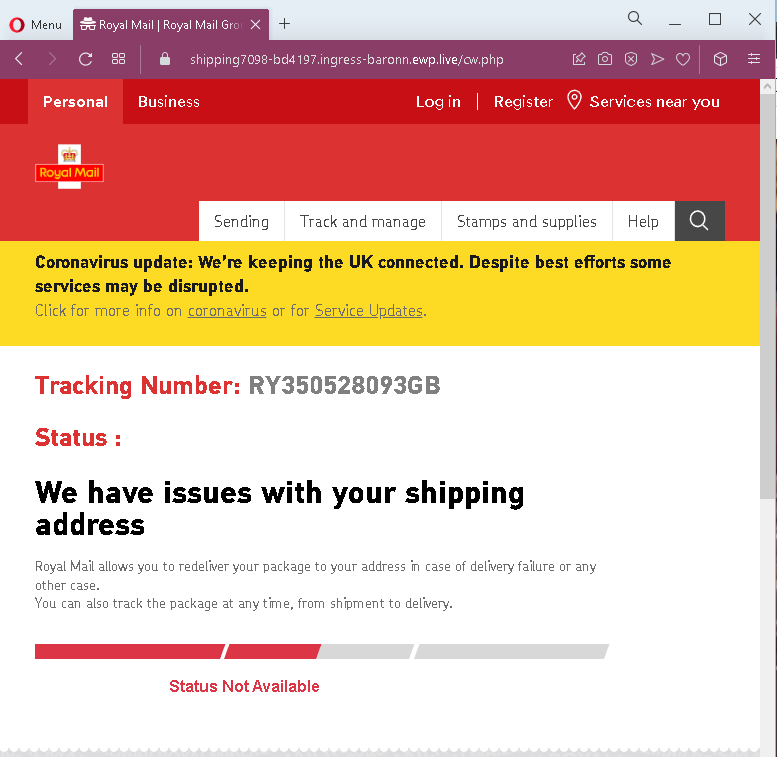
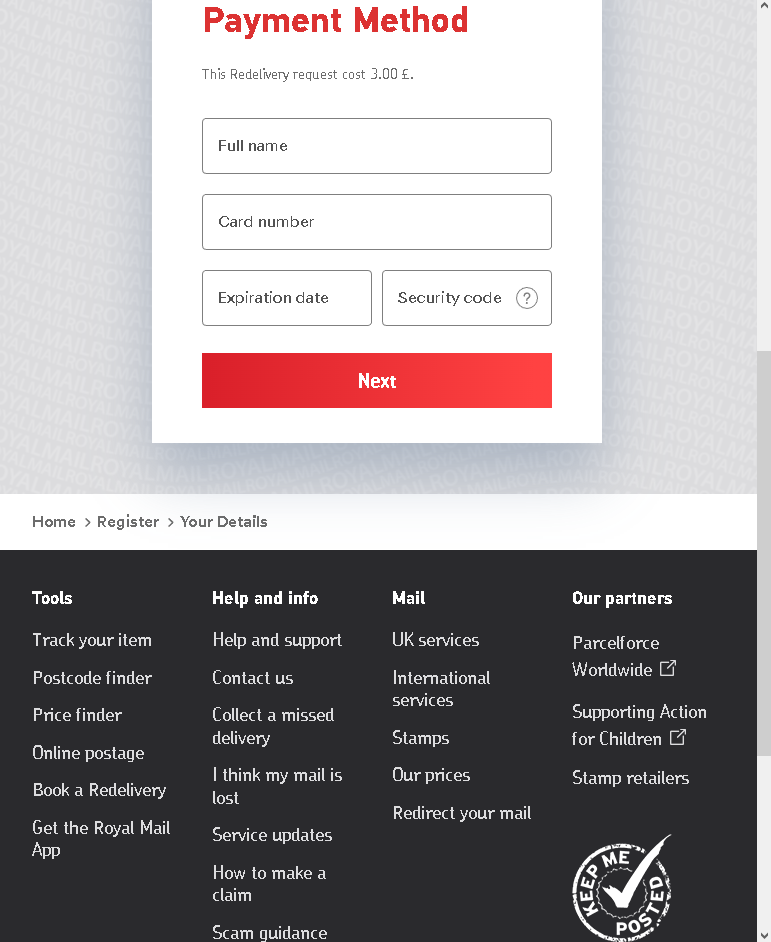
These two screenshots show a phishing campaign impersonating Royal Mail, targeting users in the United Kingdom. The scam uses a fake delivery issue and a small redelivery fee to steal full credit card details.
Threat Analysis: Royal Mail Phishing – Fake Redelivery Fee & Card Harvesting
Step 1 – Fake Tracking Page (First Screenshot)
The victim lands on a page that mimics Royal Mail’s tracking interface. It displays:
- A fake tracking number
- A claim that there is an issue with the shipping address
- Instructions to arrange redelivery
Step 2 – Card Payment Page (Second Screenshot)
The victim is taken to a page that asks for:
- Full name
- Card number
- Expiration date
- Security code (CVV)
A small redelivery fee (£3.00) is shown to make the payment seem insignificant.
The goal:
The attacker collects complete card details to make fraudulent purchases, clone the card, or sell the information.
Red flags to watch for:
- Suspicious URL: The page is hosted on a domain that is not
royalmail.com - Fake tracking number: The tracking number format may look plausible, but it cannot be verified on the real Royal Mail site.
- Request for CVV: Royal Mail does not ask for your card security code for redelivery fees. These fees are typically paid through a secure, integrated payment gateway after you log in or confirm your address.
- Small fee trick: £3.00 is a trivial amount meant to lower suspicion.
- Copied content: The second page includes real Royal Mail footer links and navigation menus, which are copied from the genuine site to appear authentic.
What to do if you encounter this:
- Do not enter any card details.
- If you are expecting a delivery, track it directly by typing
royalmail.com - If you have already entered card details, contact your bank immediately to block the card and dispute any unauthorized charges.
- Report the phishing page to Royal Mail (e.g., via their official fraud reporting page).
Protective measures:
- Never click links in unsolicited delivery messages. Always go directly to the official courier website.
- Never pay a “redelivery fee” via a link. Legitimate redelivery fees are paid through the official site after verifying your tracking number.
- Check the URL carefully: Legitimate Royal Mail domains end with
royalmail.com - Enable transaction alerts on your bank account to catch unauthorized charges early.