
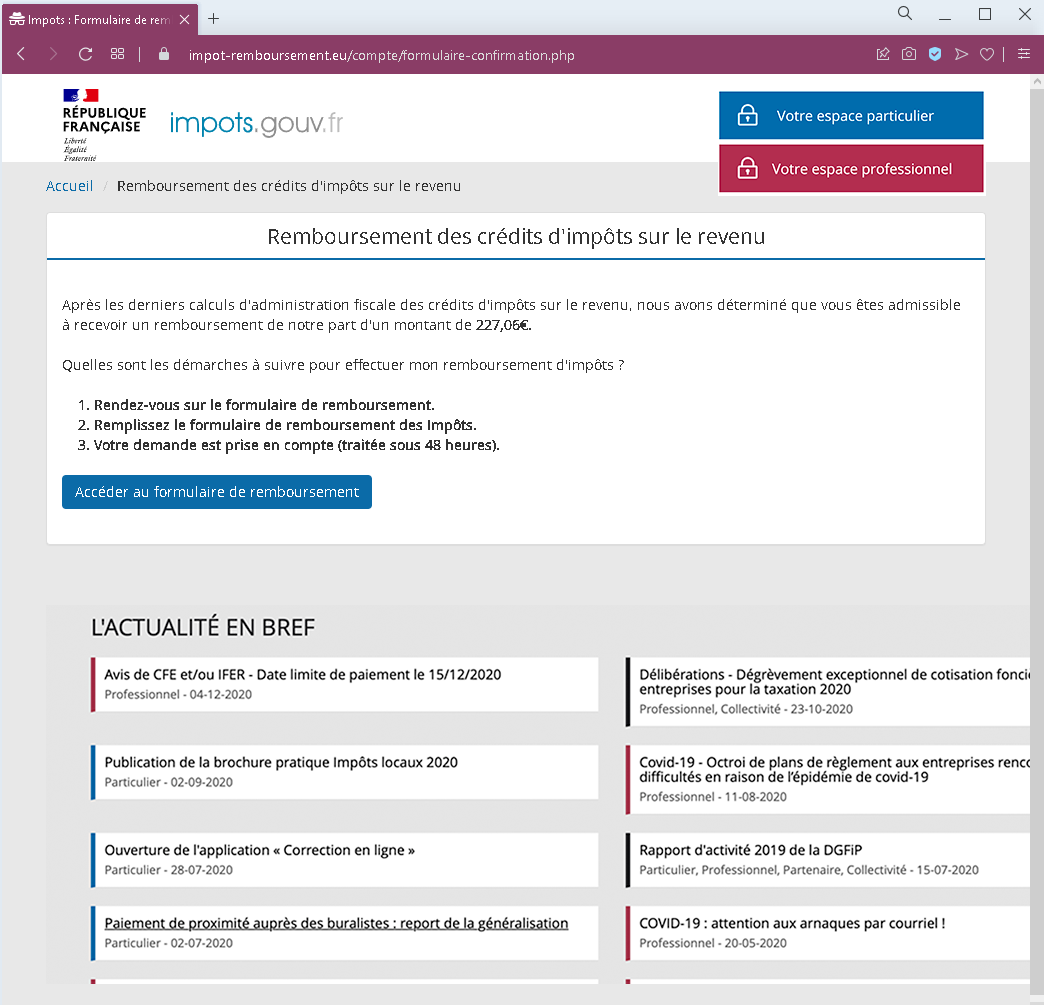
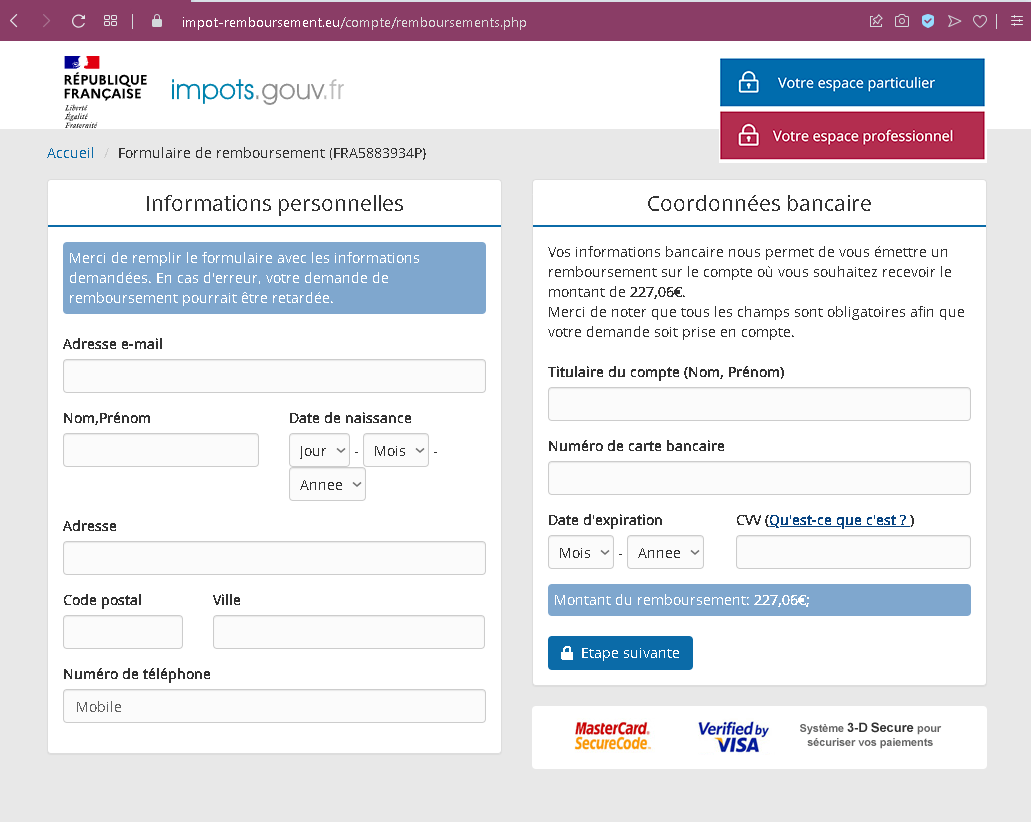
These two screenshots show a phishing campaign impersonating the French tax authorities (impôts), offering a fake tax refund (€227.06) to trick victims into providing personal information and full credit card details.
Threat Analysis: French Tax Refund Phishing – Personal & Card Data Harvesting
How the scam works:
Step 1 – Fake Refund Notification (First Screenshot)
The victim receives an email or lands on a page claiming that after the latest tax credit calculations, they are eligible for a refund of €227.06. The page includes steps to follow (click the refund form link) and shows fake news items (e.g., “Avis de CFE”, “Covid-19 – attention aux arnaques par courriel”) copied from the real French tax website to appear legitimate.
Step 2 – Personal Information & Card Details Page (Second Screenshot)
The victim is taken to a page that asks for:
- Email address
- Full name
- Date of birth
- Postal code and city
- Phone number (mobile)
- Bank card details: cardholder name, card number, expiration date, CVV
A message claims this information is needed to issue the refund to the victim’s bank account. Fake security logos (MasterCard SecureCode, Verified by Visa) are added to appear trustworthy.
The goal:
The attacker collects:
- Personal identity information (name, DOB, address, email, phone) for identity theft
- Full credit/debit card details (number, expiry, CVV) to make fraudulent purchases or clone the card
No refund is ever issued – the entire offer is fabricated.
Red flags to watch for:
- Suspicious URL: The pages are hosted on a domain that is not
impots.gouv.fr(the official French tax website). - Request for card details for a refund: Legitimate tax refunds are deposited directly to the bank account the tax authorities already have on file – they never ask for your card number, expiration date, or CVV.
- Fake news section: The “L’ACTUALITÉ EN BREF” section contains old news (dates from 2020) and includes a warning about email scams – ironically placed on a scam page itself.
- Poor design / inconsistencies: The layout and language have minor inconsistencies compared to the real French tax portal.
- Unsolicited refund offer: The French tax authorities (DGFiP) do not send unsolicited emails with links to claim refunds. Any such message is a scam.
What to do if you encounter this:
- Do not enter any personal or card information.
- If you are a French taxpayer, always access your tax account by typing
impots.gouv.frdirectly into your browser. - If you have already entered card details, contact your bank immediately to block the card and dispute any unauthorized charges.
- Report the phishing page to the French tax authorities (via their official reporting form) and to the platform hosting the page.
Protective measures:
- Never click links in unsolicited messages claiming a tax refund.
- Always type the official government URL directly into your browser.
- Never provide your card CVV or expiration date to “receive” a refund – refunds do not require this information.
- Enable two‑factor authentication on your bank account and email.
- Be suspicious of any message that creates urgency (“claim your refund now”) and asks for sensitive information.