
This screenshot shows a phishing page in Arabic that promises to increase the number of followers for a social media account (likely Instagram, TikTok, or Twitter). The victim is asked to provide their username, password, and desired number of followers – a classic credential‑harvesting scam.
Incident Report: This malicious interface was intercepted, verified, and locked down firsthand by the
Antiphishing.bizsecurity team during our daily link moderation procedures. To protect the public, the hostile origin link has been fully defanged within our infrastructure. We document and analyze these live visual patterns to help security researchers and users detect replica fraud techniques before financial damage occurs.
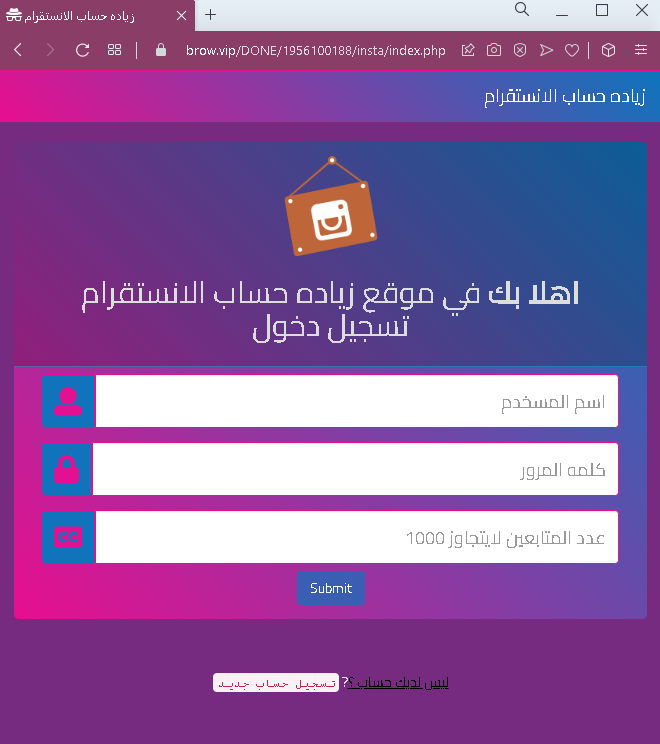
Threat Analysis: Social Media Follower Booster Phishing – Credential Harvesting
How it works:
The victim encounters an ad, email, or direct message promoting a free or cheap service to gain thousands of followers instantly. The link leads to this page, which asks for:
- Username (social media login name)
- Password
- Desired number of followers (to make the offer seem customizable)
After the victim submits this information, the attacker captures the credentials. The victim may be redirected to a fake “processing” page or asked to complete a “verification” (e.g., a human verification survey), but the damage is already done.
The goal:
The attacker steals social media account credentials to:
- Take over the account and lock out the original owner
- Post spam, scams, or malicious links from a trusted account
- Use the account to send phishing messages to the victim’s followers
- Sell the account or its data on criminal markets
Red flags to watch for:
- Suspicious URL: The page is hosted on a domain that is not the official social media platform (e.g., not
instagram.comtiktok.comtwitter.com - Request for password: No legitimate follower‑boosting service requires your account password. This is always a scam.
- Too good to be true offer: Promises of instant, free, or cheap followers are classic lures for credential theft.
- Poor design and generic Arabic phrasing: The page lacks the branding and security features of the real platform.
What to do if you encounter this:
- Do not enter your username or password.
- If you have already entered your credentials, change your password immediately on the real social media platform. Enable two‑factor authentication (2FA) if available.
- Report the phishing page to the social media platform being impersonated.
Protective measures:
- Never share your password with any third‑party service claiming to boost followers, likes, or views.
- Use a password manager – it will not autofill on fake domains.
- Enable two‑factor authentication on all social media accounts.
- Be suspicious of any unsolicited offer that promises easy growth for your account.